Analecta Stoa

Reading the Ancient & Medieval World

A curated collection of public-domain primary sources in full text, books from the Internet Archive, reading companions, and modern histories — all in one place.
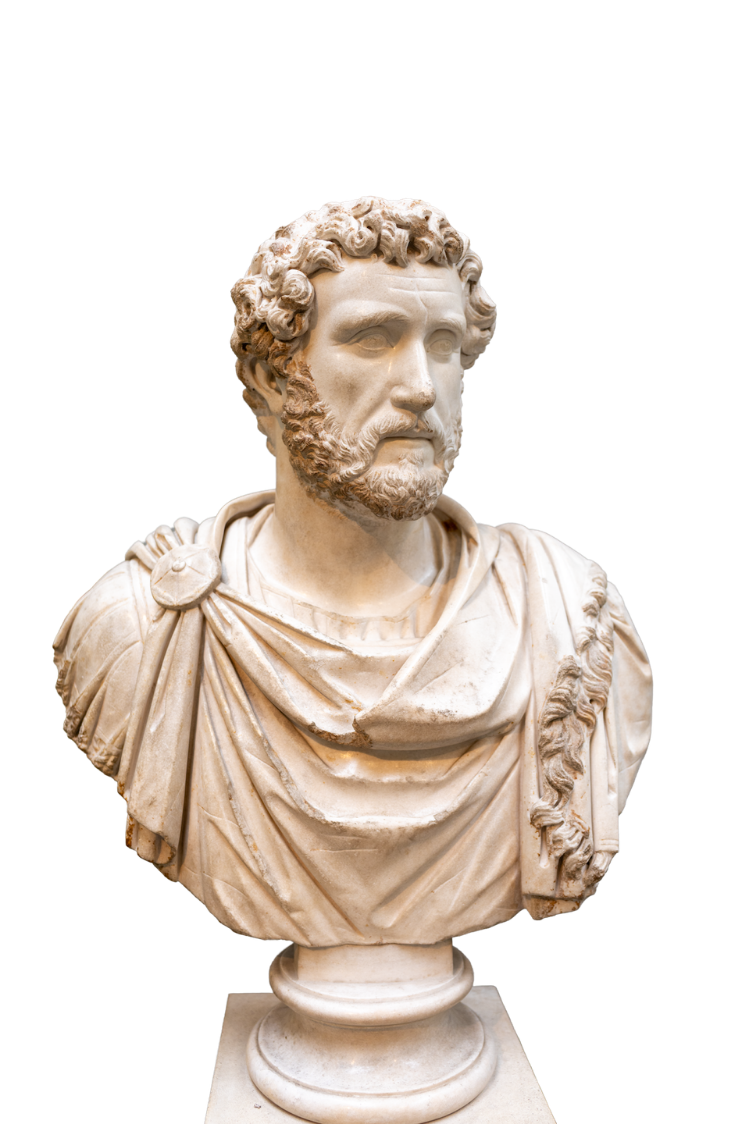
This marble bust depicts the Roman Emperor Antoninus Pius, who reigned from 138 to 161 CE.Portrait Details: The bust shows the emperor with a full, neatly trimmed beard, a feature that remained consistent throughout his 23-year reign.Military Attire: He is depicted wearing a military cloak (paludamentum) fastened with a brooch on his right shoulder.Provenance: This specific sculpture, housed in the British Museum, was found at the House of Jason Magnus in Cyrene, North Africa, and is believed to date to circa 140–160 CE.Historical Context: Antoninus Pius was the fourth of the Five Good Emperors and oversaw a period of relative peace and prosperity known as the Pax Romana.
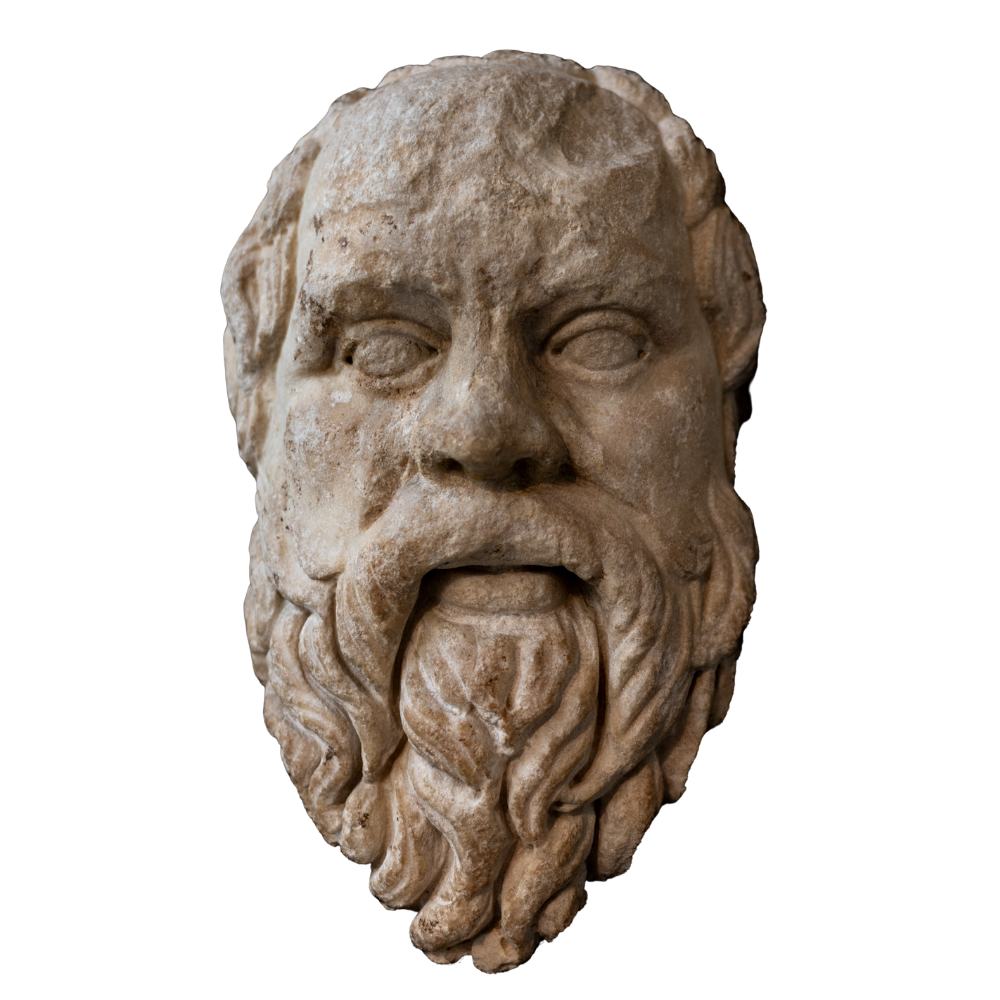
This marble bust depicts the ancient Greek philosopher Socrates, who lived from 470 to 399 BCE. Portrait Details: The bust shows Socrates with a distinctive bald head, a full beard, and a broad nose. He is often portrayed with a contemplative expression, reflecting his role as a thinker and teacher. Provenance: This specific sculpture, housed in the British Museum, is believed to be a Roman copy of an original Greek work from the 4th century BCE. Historical Context: Socrates is one of the most influential figures in Western philosophy, known for his contributions to ethics and epistemology, as well as his method of inquiry known as the Socratic method. Provenance: This specific sculpture, housed in the British Museum, is believed to be a Roman copy of an original Greek work from the 4th century BCE. Historical Context: Socrates is one of the most influential figures in Western philosophy, known for his contributions to ethics and epistemology, as well as his method of inquiry known as the Socratic method.

Ancient Greece

The Roman World

Late Antiquity

The Medieval World

Modern Histories of the Ancient and Medieval World