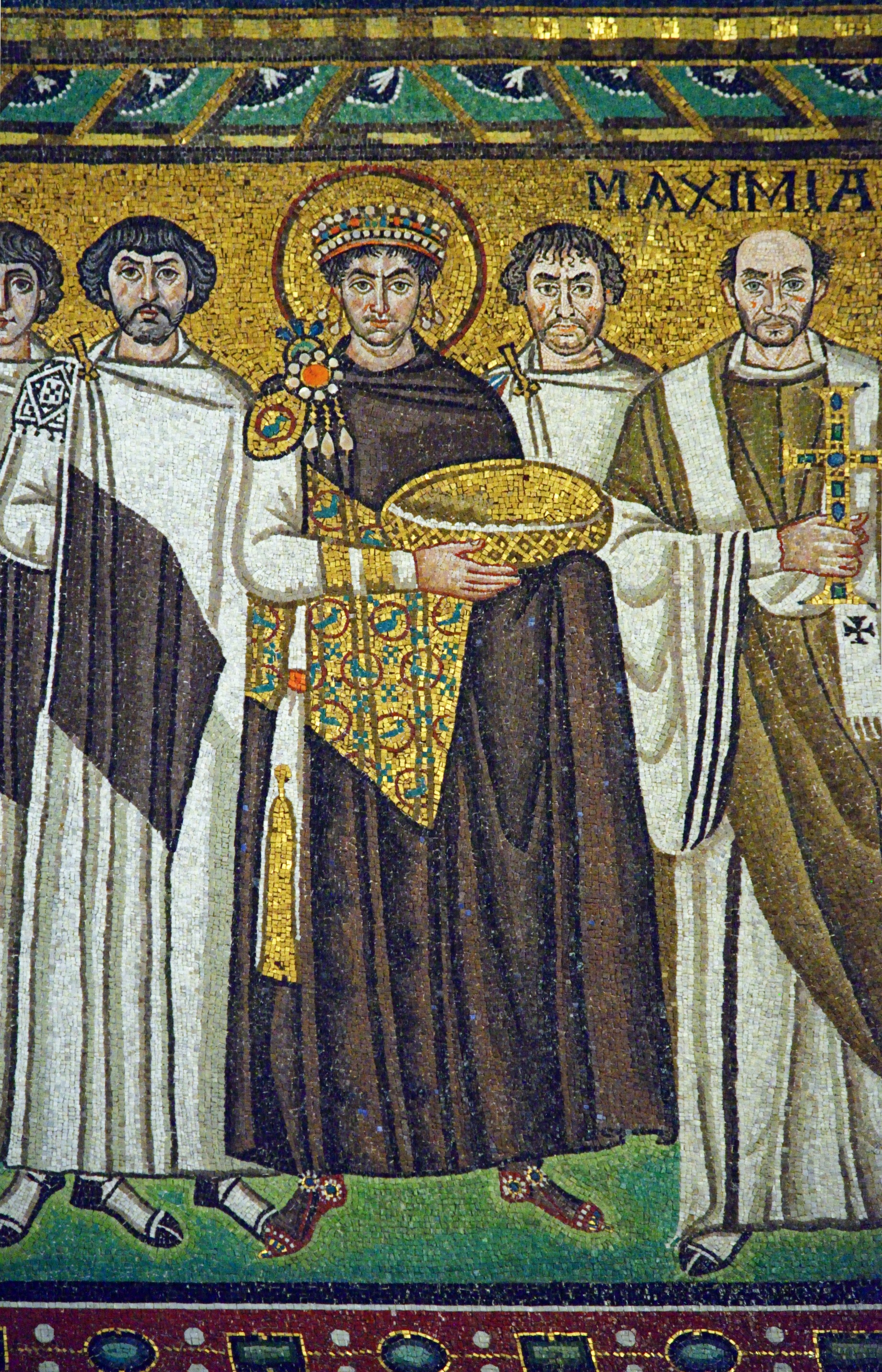
J.B. Bury, History of the Later Roman Empire: From the Death of Theodosius I to the Death of Justinian. First published London: Macmillan, 1923. Two volumes. This text is in the public domain. Volume II carries the history from the accession of Anastasius I (491 AD) through the death of Justinian (565 AD), tracing the reconquest of Africa and Italy, the codification of Roman law, and the complex religious controversies of the age. Where Gibbon mourned the East as Rome in slow dissolution, Bury insisted on treating the Byzantine state as a vigorous and creative organism in its own right — the indispensable institutional bridge between the classical and medieval worlds.
History of the Later Roman Empire
J.B. Bury
John Bagnell Bury (1861–1927) held the Regius Chair of Modern History at Cambridge and was the foremost English-language historian of the Byzantine world in his generation. His History of the Later Roman Empire remains a foundational scholarly reference: its command of Greek, Latin, and Syriac sources, its meticulous chronology, and its rehabilitation of the Eastern Empire as a subject worthy of serious history rather than a footnote to Rome's decline, set the terms for all subsequent scholarship.
Volume II opens with the reign of Anastasius and reaches its climax in the extraordinary reconquests of Justinian — Belisarius's campaigns in Africa and Italy, Narses's destruction of the Ostrogothic kingdom, and the final, fleeting reassembly of something resembling a unified Mediterranean empire. Bury gives equal weight to the administrative, legal, and theological dimensions of the age: the Corpus Iuris Civilis, the Three Chapters controversy, the building of Hagia Sophia. The result is a picture of an empire not dying but transforming — under enormous pressure, but still capable of creative institutional invention.