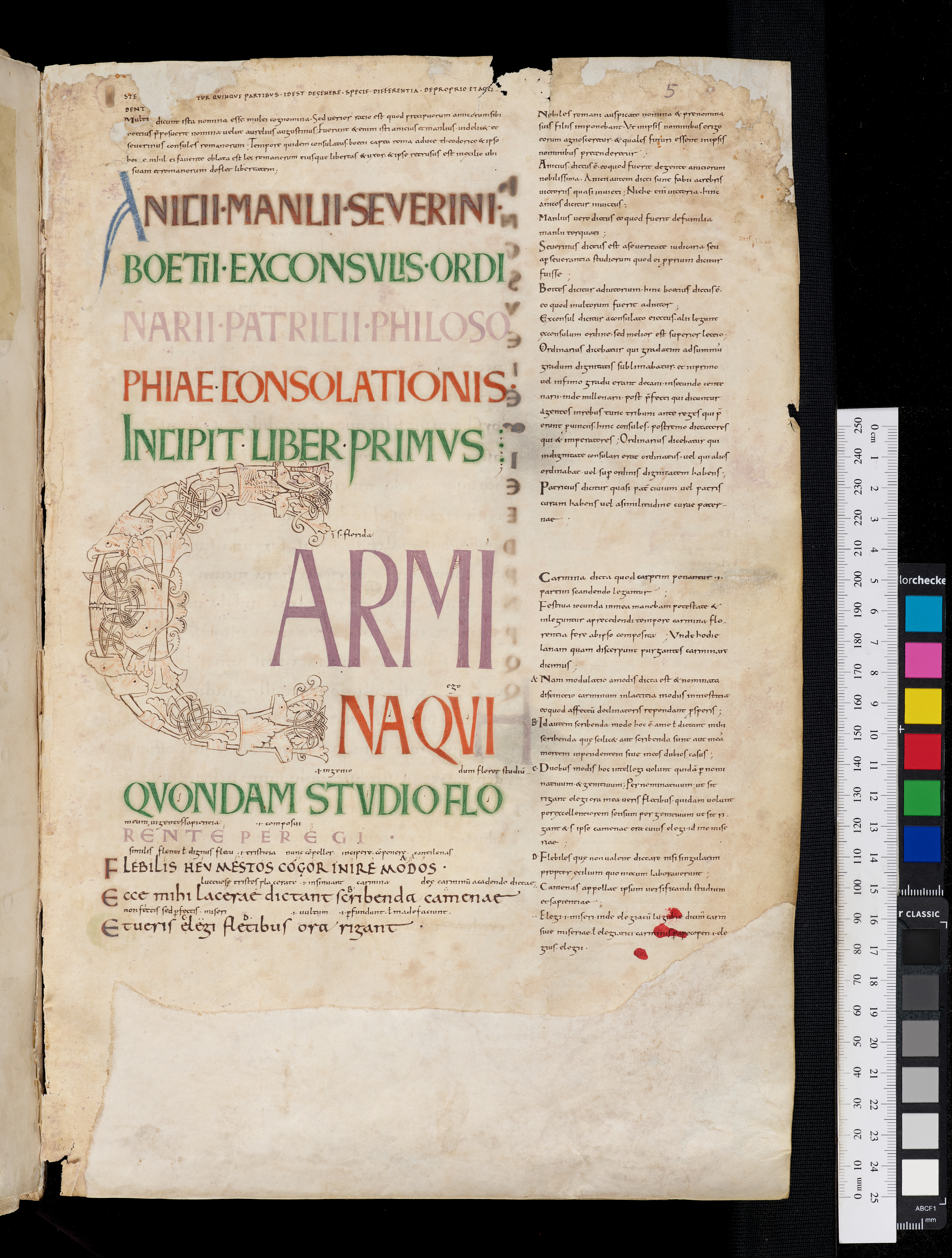
Oxford, Bodleian Library, MS. Auct. F. 1. 15, fol. 5r — Boethius, De consolatione philosophiae, with commentary and gloss, late 10th century, Canterbury, St. Augustine's Abbey

The Theological Tractates · The Consolation of Philosophy

Reading companion and full text of Boethius: The Theological Tractates and The Consolation of Philosophy (Loeb Classical Library 74), the Tractates translated by H. F. Stewart and E. K. Rand, the Consolation in the English translation of 'I. T.' (1609) revised by H. F. Stewart — the five opuscula sacra that attempt to reconcile Platonic philosophy with Christian theology, and the work Boethius composed in prison awaiting execution, which became the most widely read philosophical text of the medieval millennium.
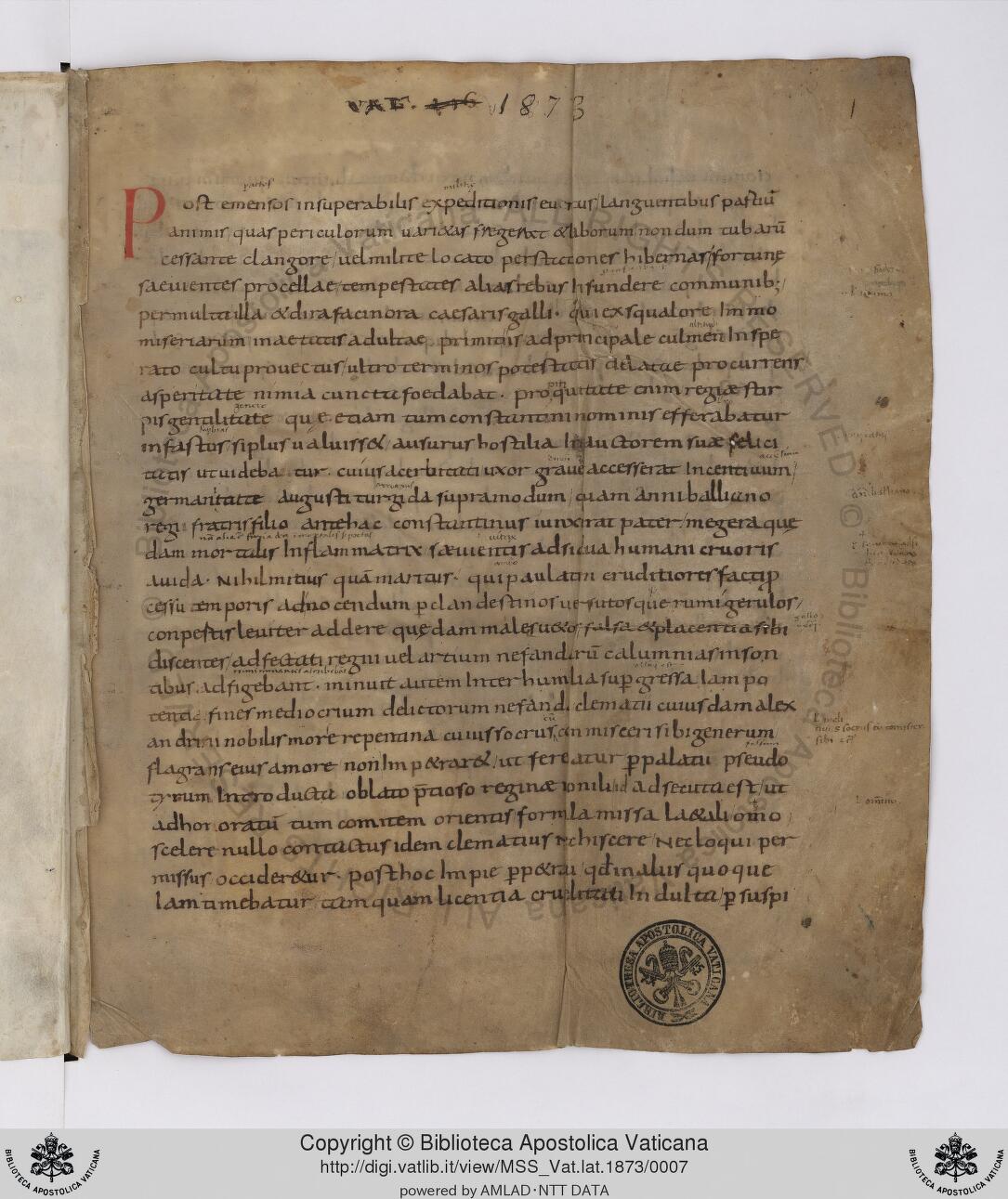
Folio 1r of the manuscript Vaticanus Latinus 1873, a 9th-century Carolingian codex of the Res Gestae by the Roman historian Ammianus Marcellinus. Known as the Codex Fuldensis (named for the Abbey of Fulda where it was rediscovered by humanist Poggio Bracciolini in 1417), it is the primary surviving source for the final 18 books of Ammianus’s history. This page marks the beginning of Book XIV, which chronicles the downfall of the Caesar Constantius Gallus. The large red initial P begins the word 'Post,' introducing the text: 'Post emensos insuperabiles expeditionum eventus...' ('After the outcome of insurmountable expeditions...'). The text is written in Carolingian minuscule, a clear and uniform script developed during the reign of Charlemagne to standardize European Latin texts. Because the first 13 books of Ammianus’s work are lost to history, this specific page represents the modern 'start' of one of the most important historical accounts of the late Roman Empire (covering 353–378 AD). You can see various marginal and interlinear notes (glosses) added by later scholars, including famous Renaissance humanists like Niccolò Niccoli and Giulio Pomponio Leto, who studied this exact volume to recover classical knowledge. Source: Biblioteca Apostolica Vaticana (Vat. lat. 1873)

Res Gestae (Ammianus Marcellinus, Rolfe Translation)

Full text of Ammianus Marcellinus' Res Gestae in the Loeb Classical Library edition (vols. 300, 315, 331), translated by John C. Rolfe — the standard 20th-century English rendering of the last great Latin historian of Rome.

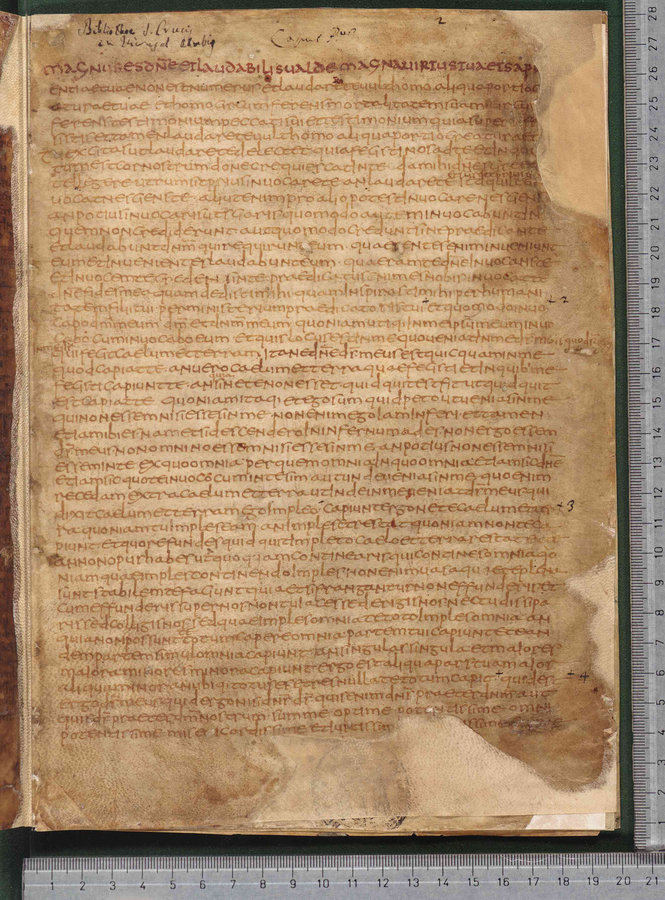
9th-century semi-uncial Latin manuscript page of Augustine's Confessions, the oldest known witness, with large display capitals and dense cursive text on aged parchment.

Confessions

A reading companion for Augustine's Confessions — the foundational autobiography of the Western spiritual tradition, exploring memory, time, restlessness, and the soul's return to God.

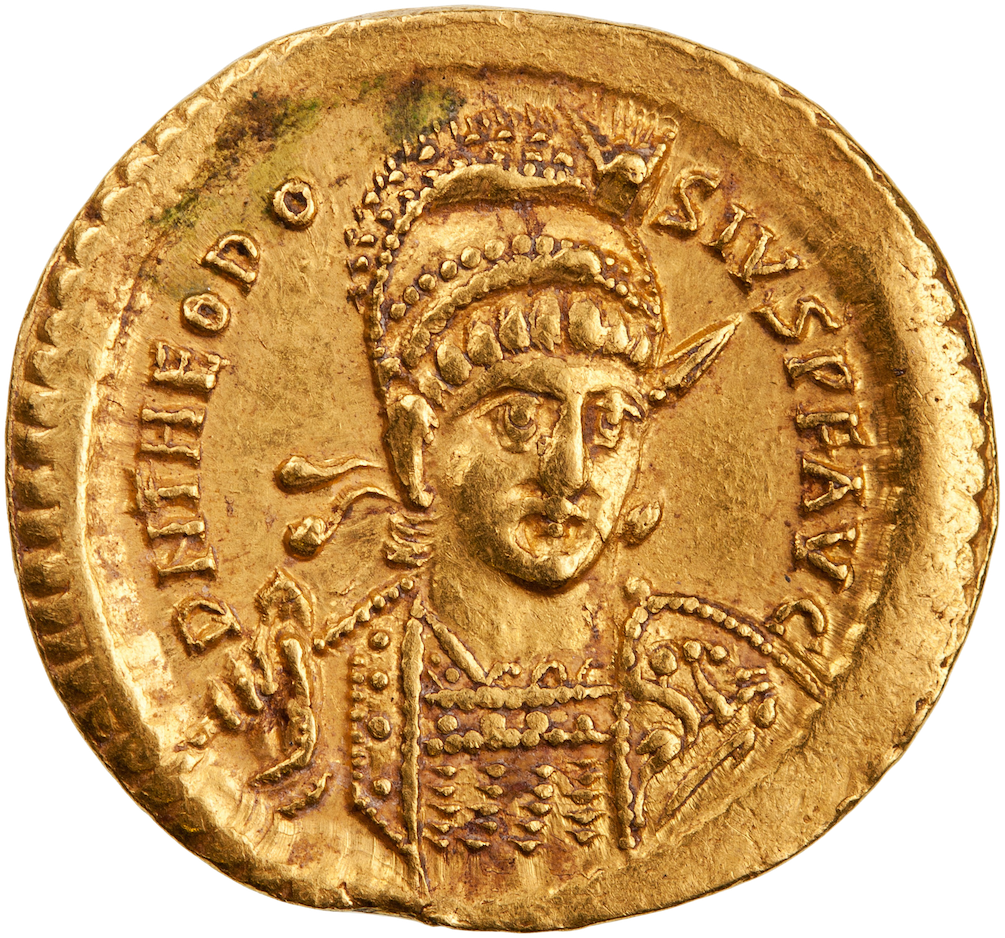
Gold Solidus of Theodosius II (425–429 AD).

History of the Later Roman Empire, Vol. 1

The first volume of J.B. Bury's authoritative history of the Later Roman Empire, covering the reigns from the death of Theodosius I through the accession of Anastasius — an age of barbarian pressure, dynastic crisis, and the definitive parting of East and West.

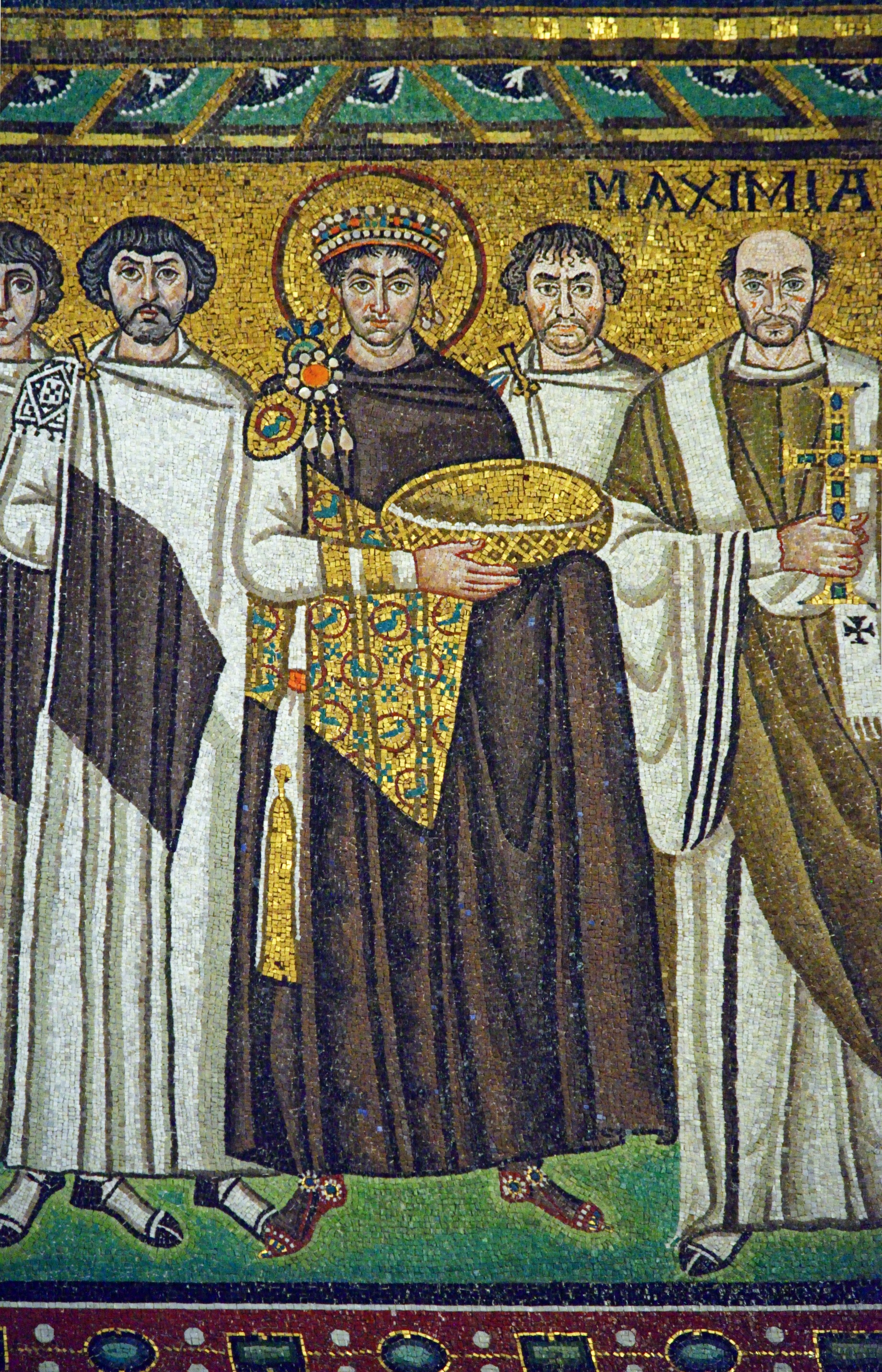
Emperor Justinian I and his retinue. Detail of the apse mosaic, Basilica of San Vitale, Ravenna, Italy, c. 547 AD.

History of the Later Roman Empire, Vol. 2

The second volume of J.B. Bury's authoritative history of the Eastern Empire, covering the reigns of Anastasius, Justin I, and Justinian — including the great reconquests of Africa and Italy under Belisarius and Narses.

Author Schaffers, Nestor, 1826-1896 (viaf)302528355 Title [photograph] Portrait of Henri Pirenne (1862-1935), historian, professor at the Faculty of Arts and Philosophy and rector of Ghent University during the academic years 1919-1920 and 1920-1921. Description 1 photo ; 9.1 x 5.6cm (10.4 x 6.2cm). Publisher Gand : Nestor Schaffers, ca. 1890.

Mohammed and Charlemagne

Pirenne's landmark posthumous argument that the Islamic conquest of the Mediterranean, not the Germanic migrations of the fifth century, ended the ancient world and inaugurated the Middle Ages.

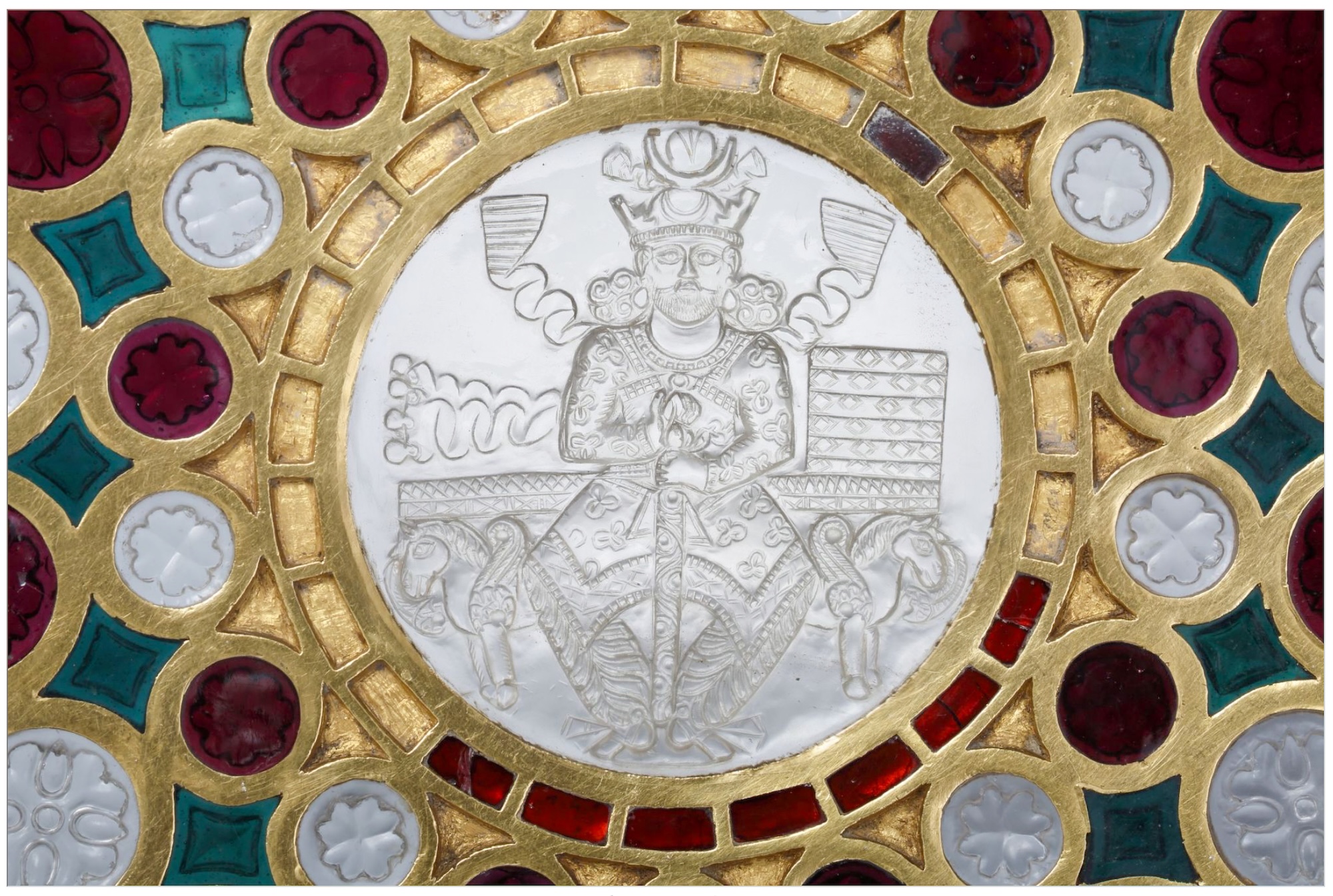
Sassanid Cup (Cup of Solomon), Iran, 6th century CE, rock crystal cameo, gold, garnet, and green glass, H. 5 cm, D. 28.2 cm, Bibliothèque nationale de France, Département des Monnaies, Médailles et Antiques, Cameo.379. The central medallion, engraved in cameo on the reverse of a disc of exceptional rock crystal, depicts a Sassanid king enthroned on a banquet bed whose feet are formed by protomes of winged horses. Dressed in embroidered court costume and wearing a pendant necklace and pear earrings, the king bears a crenellated crown adorned with a crescent moon on the forehead and surmounted by a second crescent enclosing the korymbos — the solar globe of Sassanid royal iconography. The smooth, uncurled beard is specific to Kavadh I (r. 488–531), who is the most plausible candidate for the cup's patron. Kavadh I's successor after his second reign was Khosrow I, whose wars againts Emperor Justinian are documented by al-Ṭabarī. The six cushions of the banquet bed, with the bed itself forming the seventh, symbolise the seven kešvars or climates over which the Sassanid king reigned as master of the world. The medallion is set within a heavy gold mesh enclosing three concentric rows of rock crystal roundels and Rajasthani almandine garnets alternating with deep green glass lozenges, all carved in relief with florets on their reverse. A Pahlavi inscription engraved on the interior of the foot records the gold weight of the mount at manufacture: 107 staters (approximately 1.73 kg), attesting to production in a royal workshop. Seized from the treasury of the abbey of Saint-Denis by Revolutionary commissioners on 30 September 1791, the cup had been in the abbey's possession since at least 877 CE, when Charles the Bald gave it to Saint-Denis as the Hanap of Solomon — an attribution that, through the medieval Islamic identification of Chosroes I with Solomon, preserves a distant memory of the cup's Sassanid origin.

Ta'rīkh al-Rusul wa-al-Mulūk, Vol. V: The Sāsānids, the Byzantines, the Lakhmids, and Yemen

Reading companion for Vol. V of The History of al-Ṭabarī — covering the Sāsānid empire, Byzantium, the Lakhmid client kingdom, and pre-Islamic Yemen — in the annotated translation by Clifford Edmund Bosworth (SUNY Press, 1999).