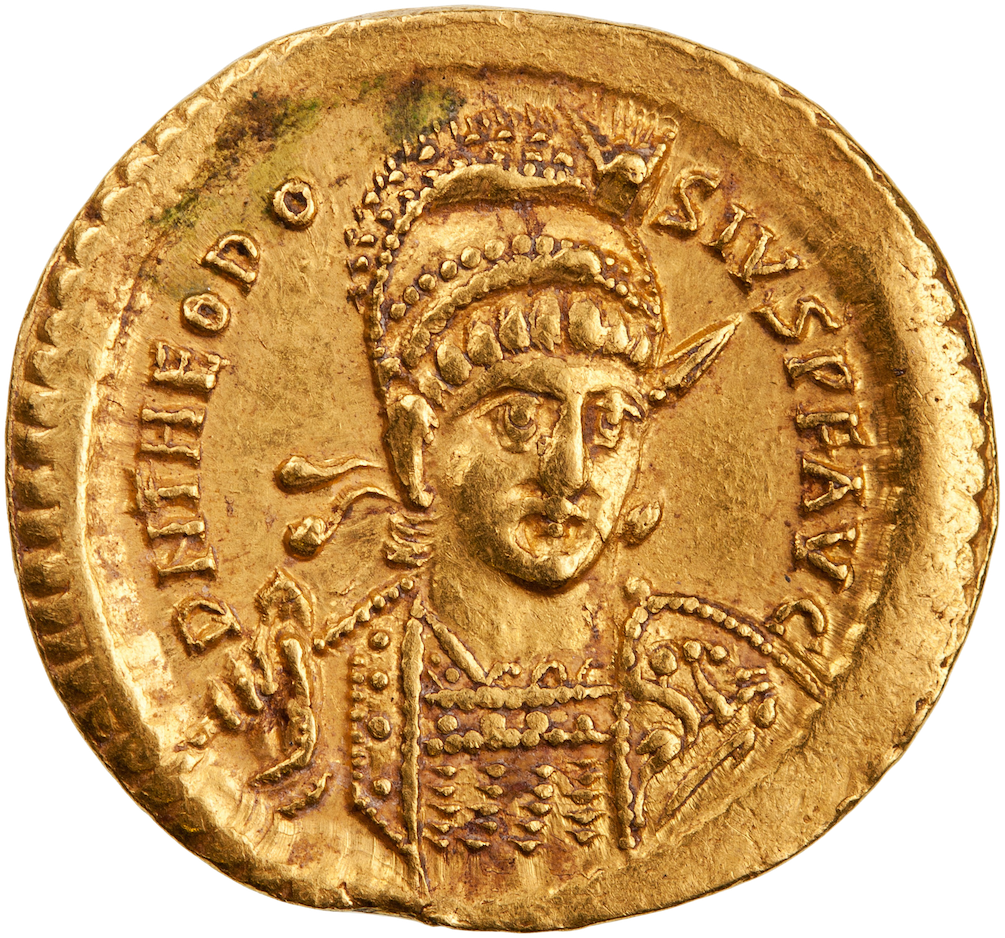
J.B. Bury, History of the Later Roman Empire: From the Death of Theodosius I to the Death of Justinian. First published London: Macmillan, 1923. Two volumes. This text is in the public domain. Volume I carries the history from the death of Theodosius I (395 AD) through the accession of Anastasius I (491 AD), tracing the collapse of the Western Empire, the survival of the East, and the establishment of the barbarian successor kingdoms. Where Gibbon saw only decline and fall, Bury insisted on examining the institutional resilience of the Roman state — the fiscal machinery, the diplomatic traditions, the administrative continuity — that allowed Constantinople to outlast the catastrophe engulfing the West.
History of the Later Roman Empire
J.B. Bury
John Bagnell Bury (1861–1927) held the Regius Chair of Modern History at Cambridge and was the foremost English-language historian of the Byzantine world in his generation. His History of the Later Roman Empire remains a foundational scholarly reference: its command of Greek, Latin, and Syriac sources, its meticulous chronology, and its rehabilitation of the Eastern Empire as a subject worthy of serious history rather than a footnote to Rome's decline, set the terms for all subsequent scholarship.
Volume I opens in the immediate aftermath of Theodosius's death and the fateful division of the empire between his sons Arcadius and Honorius. It traces the career of Stilicho, the Visigothic sacks of Rome under Alaric, the dissolution of Roman authority in Britain, Gaul, and Spain, and the long reign of Theodosius II in the East — with his great defensive walls, his law code, and his uneasy management of the Hunnic threat under Attila. The volume closes with the deposition of Romulus Augustulus in 476 and the consolidation of Zeno's grip on the East. Bury's achievement is to hold both halves of the story in view simultaneously, showing the divergent fates of the two courts not as inevitable but as the product of contingent decisions, geographical fortune, and institutional difference.