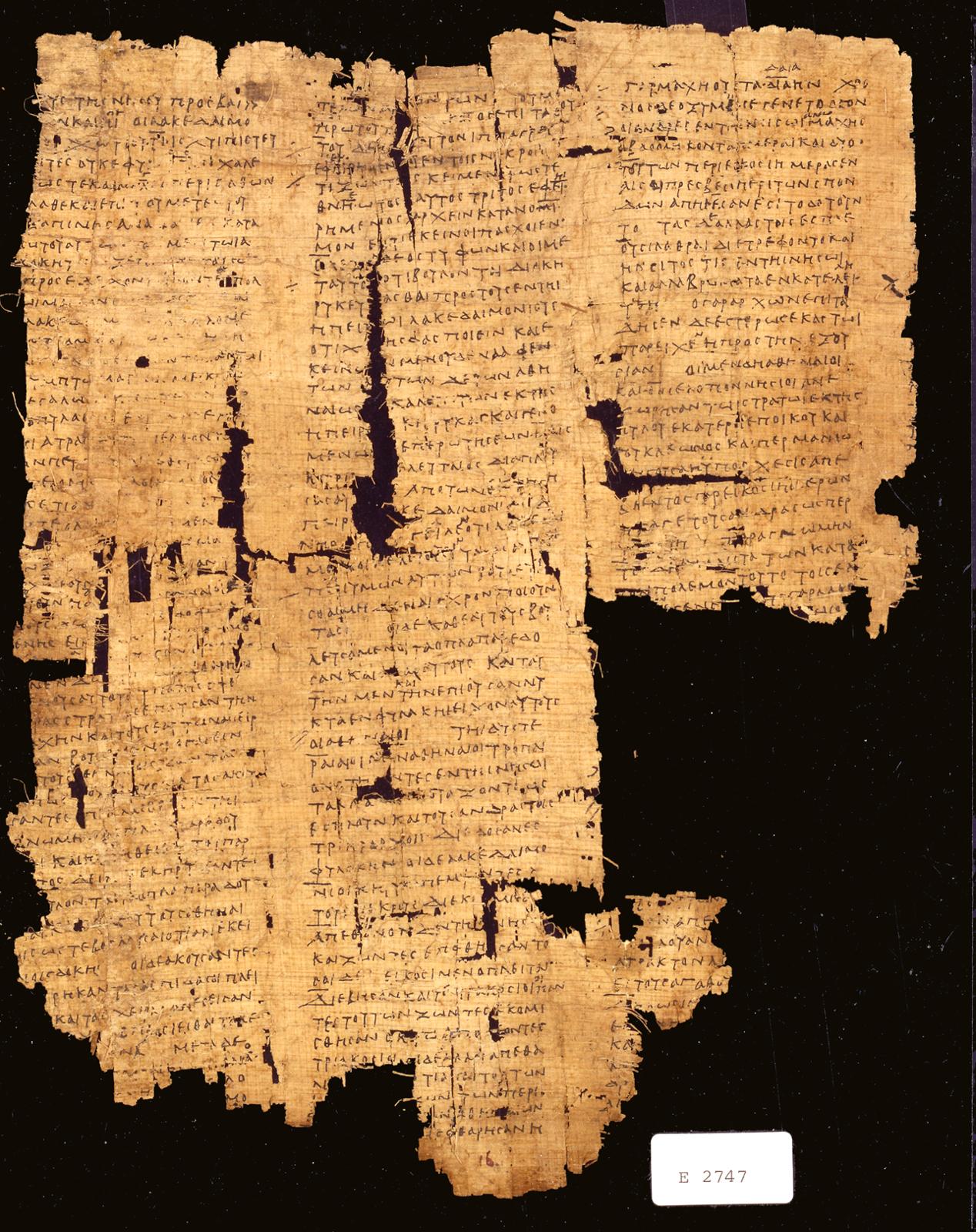
All translations are from Paul Woodruff's The Essential Thucydides: On Justice, Power, and Human Nature (Second Edition). Selections from The History of the Peloponnesian War.
Overview
The War
In 431 BCE, the two great powers of the Greek world went to war, and the civilization they had built together began to come apart. Athens was imperial, commercial, democratic, and naval — the city of the Parthenon, Sophocles, and self-governance. Sparta was austere, militaristic, oligarchic, and land-based — a society that had turned itself into a weapon. A generation earlier they had together beaten back Persia. Now they spent nearly three decades destroying each other.
The Peloponnesian War (431–404 BCE) engulfed virtually the entire Greek world, fought on land and sea, in Sicily and Thrace, across the Aegean. It ended with the catastrophic defeat of Athens, the dismantling of its democracy, and a Greek world so exhausted that it would fall within a few generations to the Macedonian kingdom of Philip II. The war that was supposed to settle Greek supremacy instead ensured no Greek city would ever be supreme again.
A Possession for All Time
Near the opening of his History, Thucydides draws a sharp contrast between his work and everything before it. He dismisses the poets for embellishing events, the early chroniclers for writing to win an immediate audience rather than to record what actually happened. What he is offering instead, he says, is something harder and more durable — a work for those who
want to understand clearly the events which happened in the past and which (human nature being what it is) will, at some time or other and in much the same ways, be repeated in the future.
This is an astonishing claim. Thucydides is not simply saying his account is more accurate than Homer's. He is proposing a new theory of what history is for. The past is not a storehouse of glorious deeds or divine moral lessons — it is a pattern built into human nature itself, and if you study it with sufficient rigor and honesty, you will be equipped to understand the present and anticipate the future. History, in this view, is a form of political science.
What Sets It Apart
Before Thucydides, history as a discipline barely existed. Herodotus, his older contemporary, had written the first great prose account of the Persian Wars — magnificent, sprawling, digressive, full of legend, divine intervention, and wonder. He is endlessly curious, often credulous, always entertaining.
Thucydides reads like a different species of mind entirely:
Radical exclusion of the supernatural. The gods do not act in Thucydides. Oracles appear only as things people believe in. The causes of events are always human — fear, honor, interest. He essentially invented secular historical explanation.
The speeches. Thucydides punctuates his narrative with formal speeches — the Funeral Oration of Pericles, the Melian Dialogue, the Mytilenean Debate — which he acknowledges he could not have recorded verbatim. He aimed instead to reproduce "the general sense of what was actually said" while keeping to what was called for by each situation. The result is neither pure document nor pure invention: intellectual drama in which the arguments are real even if the words are reconstructed. The Melian Dialogue presses the logic of power to conclusions that real diplomatic negotiations rarely reach. When the Athenian envoys address Melos, they set aside the language of justice altogether:
We both know that decisions about justice are made in human discussions only when both sides are under equal compulsion; but when one side is stronger, it gets as much as it can, and the weak must accept that.
It remains one of the most unflinching analyses of power ever written.
Structural analysis. Thucydides distinguishes between the immediate cause of the war (disputes over Corcyra and Potidaea) and its truest cause — a distinction political scientists still use today. He understood that states, like people, can be driven to war by anxieties they barely articulate to themselves:
I believe that the truest reason for the quarrel, though least evident in what was said at the time, was the growth of Athenian power, which put fear into the Lacedaemonians and so compelled them into war.
Incompleteness. The History simply stops. We never get Thucydides's account of Sicily's aftermath, the revolution of 411, or the final Spartan victory. It reads like a ruin — and ruins last.
The Author
Thucydides was an Athenian general and aristocrat who lived through the events he described. He contracted the plague that devastated Athens in 430 BCE and survived it. Elected strategos (general) in 424 BCE, he failed to prevent the fall of Amphipolis to the Spartan commander Brasidas and was exiled for it. That exile, lasting twenty years, gave him something invaluable: the freedom to travel both sides of the war, to interview participants on every front, and to observe the conflict with the detachment that defeat forces upon a man.
He almost certainly did not live to finish his work. The History breaks off abruptly in 411 BCE, mid-sentence, mid-war, thirteen years before the end.
Method and Innovation
A New Kind of Intellectual Seriousness
Thucydides announces his method before he begins his history, and the announcement is itself an act of aggression. The opening sections of Book I — known as the Archaeology — are not scene-setting but demolition. He works through received Greek tradition and shows, one by one, that it cannot be trusted: not because people lied, but because they did not think carefully about what it means to know something. His project begins with epistemology — with the question of how historical knowledge is even possible.
This was genuinely new. Herodotus had been occasionally skeptical of legends, willing to report multiple versions of an event. But Herodotus's skepticism was selective; his curiosity was finally stronger than his doubt. Thucydides's skepticism is foundational: if you cannot say how you know, you do not know.
Rejecting Myth and Popular Memory
Thucydides's attack on myth operates on two fronts. Against the poets, he makes a structural argument: poets are in the business of pleasing audiences, and pleasure systematically distorts the past. Against popular memory, he makes a different argument: people are lazy about the past, accepting the first account they hear and ceasing to inquire further. He gives a famous example — most Athenians believed that Hipparchus, killed by the tyrannicides in 514 BCE, had been the reigning tyrant of Athens. He was not; Hippias was the tyrant. Athenian democratic mythology had never bothered to get the story straight because its political function did not require accuracy.
The Evidentiary Standard
Thucydides describes his evidentiary practice with a self-awareness bordering on the painful. Personal participation ranks highest — his account of the plague is written with the clinical precision of a man who watched people die and survived himself. Reported testimony is treated with explicit caution, since witnesses to the same event frequently disagree as they were partial to one side or the other, or as they remembered. When evidence is unavailable, he reasons from what is humanly and logically probable given the circumstances — not speculation but disciplined inference from known premises about human behavior and political motivation. He states his practice directly:
As for the real actions of the war, I did not think it right to set down either what I heard from people I happened to meet or what I merely believed to be true. Even for events at which I was present myself, I tracked down detailed information from other sources as far as I could. It was hard work to find out what happened, because those who were present at each event gave different reports, depending on which side they favored and how well they remembered.
What he does not do — and this absence is itself a method — is appeal to divine will, fate, or any cause that cannot be traced to human decision and human character. His preface closes with a declaration of purpose that doubles as a rebuke to every more entertaining work that preceded his:
This history may not be the most delightful to hear, since there is no mythology in it. But those who want to look into the truth of what was done in the past — which, given the human condition, will recur in the future, either in the same fashion or nearly so — those readers will find this History valuable enough, as this was composed to be a possession for all time, and not to be heard for a prize at the moment of a contest.
The Speeches: The Central Methodological Problem
No aspect of Thucydides's method has generated more scholarly controversy than his roughly forty speeches, ranging from brief battlefield exhortations to extended deliberative debates. He addresses his practice directly in the preface:
The words particular people said in their speeches, either just before or during the war, were hard to record exactly, whether they were speeches I heard myself or those that were reported to me at second hand. I have written down what I thought the situation demanded for each speaker, keeping as near as possible to the general sense of what was actually said.
This statement has two halves that pull against each other — a commitment to accuracy and a license for invention — and both are operative at once, which is exactly what makes the speeches so strange and so powerful. Some are probably close to what was actually said. The Melian Dialogue reads like a philosophical dialogue distilled to a purity no actual negotiation could achieve.
The speeches function as analytical instruments. By juxtaposing them — the Mytilenean debate's Cleon and Diodotus, the Nicias and Alcibiades arguments over Sicily — Thucydides makes the reader a participant in the decisions of the past, and therefore better equipped to recognize the same structures of argument in the present.
Structure and Survival
What We Have
The History comes down to us in eight books — a division almost certainly not Thucydides's own, but the work of later Alexandrian editors. What Thucydides left was a continuous Greek prose manuscript that runs from the war's origins in 431 BCE to a sentence in 411 BCE, and then simply stops. The war it is describing still has seven years left to run.
This is not a rhetorical device. It is a death.
(Other editions, like Mynott's, structure the text around Thucydides's own method of dividing the war into summers and winters, as he explicitly outlines in the text — e.g., II.1, V.20.)
Book I — Archaeology and Causes
The most architecturally complex book. The Archaeology establishes Thucydides's evidentiary standards; the Pentecontaetia — a compressed history of the fifty years between the Persian Wars and the Peloponnesian War — provides the essential backstory: how Athens built its empire, how Spartan anxiety grew, why collision was inevitable. Book I is simultaneously preface, methodology, backstory, and opening act.
Books II–III — The First Years, Mytilene and Corcyra
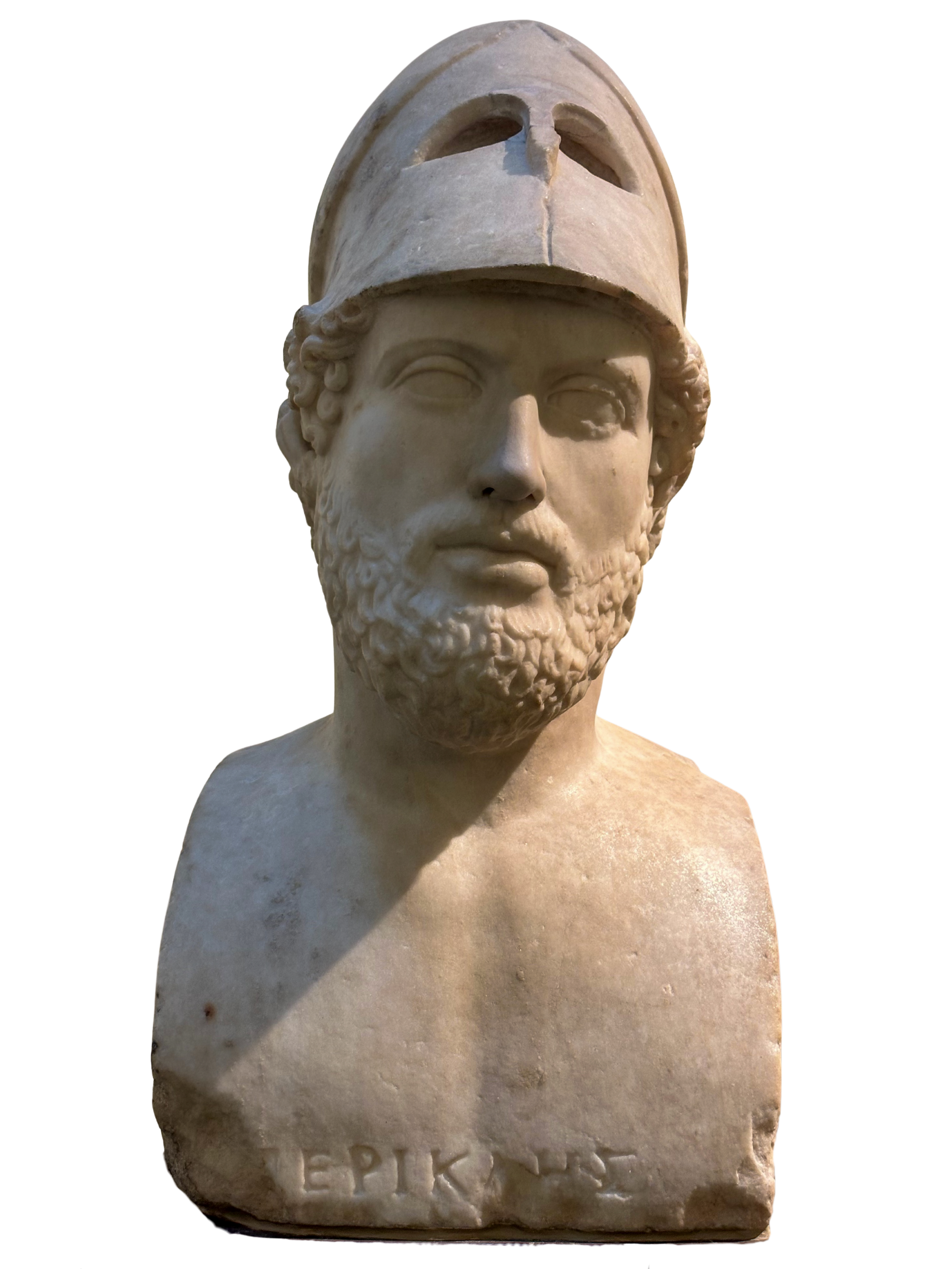
Book II opens with the Theban attack on Plataea, then delivers the Funeral Oration of Pericles — and within pages, the plague of 430. The juxtaposition is devastating: Pericles has just delivered the most eloquent defense of Athenian civilization ever recorded, and the city is dying in the streets. Thucydides does not editorialize. The structure speaks.
Book III contains the Mytilenean Debate — the assembly's two-day argument over whether to massacre the population of a rebel ally — and the Corcyrean Revolution, Thucydides's analysis of civil war as a general political pathology. Both concern the corruption of judgment under pressure. Placed in quick succession, the thematic orchestration is unmistakable.
Books IV–V — The Middle Years and the Melian Dialogue
These books cover the Archidamian War's later campaigns and the Peace of Nicias (421 BCE). Book IV includes the famous Athenian victory at Pylos and the capture of Spartan soldiers at Sphacteria — significant beyond its military weight, since the inviolability of the Spartan warrior had been a cornerstone of Greek psychology, and these men surrendered.
Book V contains the Melian Dialogue (416 BCE), positioned with deliberate care immediately before the Sicilian Expedition. The Athenians force neutral Melos into submission, execute its men, enslave its women and children. The next book opens with the decision to invade Sicily. The placement is Thucydides's quiet argument: Athens has become what it claimed to oppose, and what follows is consequence.
Books VI–VII — The Sicilian Expedition
Widely regarded as the greatest sustained narrative in ancient historiography. Athens's catastrophic attempt to conquer Sicily — the largest naval expedition in Greek history — ends in the total destruction of the Athenian fleet and army in Syracuse harbor. Nearly fifty thousand men were killed or enslaved. The Athenian navy, the foundation of imperial power, was effectively annihilated.
Thucydides tells this story with terrible control: the initial hubris of the decision, the fatal duality of command between the reckless Alcibiades and the overcautious Nicias, the slow entrapment of the expedition, and the final catastrophe in the harbor — described with such precision and restrained horror that it remains one of the most powerful passages of historical prose ever written. Book VII is where his controlled, analytical prose comes closest to something that feels like grief.
Book VIII — The Oligarchic Revolution
Noticeably different in texture. The speeches largely disappear. The narrative is more compressed, more documentary. There are signs of haste or incompletion. And then it ends in late 411 BCE, seven years before the war's conclusion.
Signs of incompletion are visible throughout: duplicate or inconsistent passages, a "second preface" at V.26 that reads as a note to himself never quite integrated, and cross-references pointing forward to discussions that never appear. Most conspicuously, the final decade of the war — the role of Persian gold, the Athenian defeat at Aegospotami, the fall of Athens in 404 — is simply absent. Thucydides knew it; his second preface says he lived until the war's end. He did not write it.
Antiquity felt the incompleteness and produced two ancient responses: Xenophon's Hellenica, which begins almost exactly where Thucydides breaks off, and the anonymous Oxyrhynchus Historian, known only from fragments. Neither is Thucydides. Neither could be.
Key Themes
Power and Fear
Thucydides states his deepest thesis directly. The truest cause of the Peloponnesian War was not the disputes over Corcyra or Potidaea — those were triggers. The truest cause was that Sparta was afraid. Athenian power had grown so rapidly and so visibly that Sparta felt it had no choice but to fight while fighting was still possible. Fear — not greed, not ideology, not wounded honor — was the prime mover.
This structural tendency of rising power to alarm established power, and of that alarm to generate conflict even when neither side consciously wants war, is now called the Thucydides Trap in contemporary international relations theory, invoked regularly in discussions of American anxiety about China or NATO's relationship with Russia. The terminology is modern. The insight is twenty-four centuries old.
But Thucydides's treatment of power is more complex than a single structural thesis. The Athenians at Melos articulate its moral grammar with disarming frankness: justice is a concept that applies between equals, and Melos and Athens are not equals. This is not presented as Athenian villainy but as Athenian lucidity. Thucydides does not say it is wrong. He shows it operating, and then shows what it costs. The same unsentimental realism that makes Athens effective also disables the self-corrective mechanisms that might warn it when its ambitions have exceeded its capacities. Power understood purely as domination is ultimately a form of blindness.
The Fragility of Democracy
Thucydides was an Athenian aristocrat exiled by the Athenian democracy, and his relationship to democratic politics is subtly complicated. He is capable of remarkable admiration — the Funeral Oration is one of the most beautiful defenses of democratic life ever written. But he is also a diagnostician of democracy's structural vulnerabilities.
The core problem is the relationship between democratic decision-making and long-term strategic coherence. Democracy depends on persuasion, and persuasion in a mass assembly is available to demagogues who understand crowds better than strategy. Pericles, in Thucydides's portrait, was the exception: a leader of sufficient stature to lead the demos rather than follow it, to tell Athenians unwelcome truths. He dies of the plague in 429 BCE.
What follows is a study in democratic degeneration. Cleon nearly engineers a massacre in the Mytilenean Debate. Alcibiades persuades the assembly to approve the Sicilian expedition with a vision of empire, is recalled before it reaches its objective, and defects to Sparta. The assembly that Pericles could lead becomes one that its leaders must flatter — and that eventually votes for Sicily not because it has been given an honest strategic assessment but because Alcibiades has made empire feel glorious, and Nicias's cautious opposition has paradoxically strengthened the case for going, since the assembly interpreted his emphasis on the expedition's scale as an argument for sending more ships rather than fewer.
Democracy, in Thucydides's view, is not a natural equilibrium. It is an achievement, continuously maintained against pressures that are always working to undo it. Pericles's Athens was democracy's best possible case. The rest of the History is what happens when those conditions cease to obtain.
The Corruption of Language
The most philosophically radical passage in the History is Thucydides's account of the civil war at Corcyra in Book III. Under the pressure of factional violence, he observes, words changed their meanings — the vocabulary of virtue was systematically reassigned to serve the vocabulary of power:
Civil war ran through the cities; those it struck later heard what the first cities had done and far exceeded them in inventing artful means for attack and bizarre forms of revenge. And they reversed the usual way of using words to evaluate what they did. Ill-considered boldness was counted as loyal manliness; prudent hesitation was held to be cowardice in disguise, and moderation merely the cloak of an unmanly nature. A mind that could grasp the good of the whole was considered wholly lazy. Sudden fury was accepted as part of manly valor, while plotting for one's own security was thought a reasonable excuse for delaying action. A man who expressed anger was always to be trusted, while one who opposed him was under suspicion. A man who made a plot was intelligent if it happened to succeed, while one who could smell out a plot was deemed even more clever. Anyone who took precautions, however, so as not to need to do either one (they would say), had been frightened by the other side into subverting his own political party. In brief, a man was praised if he could commit some evil action before anyone else did, or if he could urge on another person who had never meant to do such a thing.
This is not merely hypocrisy — calling bad things good. It is deeper: the systematic inversion of evaluative language so that "ill-considered boldness" means "loyal manliness," "prudent hesitation" means cowardice, "moderation" means "the cloak of an unmanly nature." Once the inversion is complete, the community loses its shared vocabulary of judgment — the common language in which disagreements can be adjudicated. When words no longer mean what they mean, argument becomes impossible, and what remains is force.
Every modern analyst of propaganda and political polarization is working in the territory Thucydides mapped. Hannah Arendt, George Orwell's essays on political prose, contemporary scholarship on the degradation of public discourse — all of it is, in a sense, commentary on this passage in Book III.
Hubris and Catastrophe
The Sicilian Expedition fails for specific, identifiable, human reasons: divided command, insufficient intelligence about Syracusan resistance, the recall of Alcibiades at the worst possible moment, Nicias's excessive caution combined with his terminal illness, the failure to take Syracuse before it could be reinforced. Thucydides traces them all. He does not say the gods brought Athens low.
But he has also constructed the narrative so that the expedition's deeper cause is visible beneath the particular failures. The decision was made with fundamentally inadequate knowledge of what Athens was taking on — most Athenians did not know how large Sicily was, or that they would be fighting effectively the entire island. The decision was made in a state of collective fantasy, inflamed by the traditional Athenian tendency to believe that what Athens decided to do, Athens could do. The very qualities that made Athens great — its energy, ambition, democratic boldness, willingness to attempt what others would not dare — were, taken to their limit and uncorrected by honest self-assessment, the qualities that destroyed it. Thucydides's final accounting is characteristically stripped of consolation:
It is hard to say how many men were captured altogether, but there were at least 7,000. This was the greatest action of the war — in my opinion, the greatest in all Greek history — the most glorious victory for the winners, and the worst calamity for the losers. They were utterly vanquished on all points, and none of their losses was small. It was "total destruction" as the saying is, for the army and navy alike. There was nothing that was not lost, and few out of many returned home. That is what happened on Sicily.
Selected Passages
The Funeral Oration (Book II, 35–46)
Delivered by Pericles at the end of the war's first year, over the bodies of the Athenian dead. Pericles argues that democracy is not merely a form of government but a form of civilization — one in which participation is open to all citizens regardless of class, in which private life is free from interference, in which the city is beautiful and its pleasures available to everyone. His most audacious claim is that free men fighting for a civilization they love are as effective as trained automatons — that the Athenian way of life is not a weakness to be compensated for by military discipline but a source of genuine strength.
The critical reader notices that the speech also contains the seeds of what will destroy Athens. The confidence is real but also totalizing; the self-regard, however justified in 431 BCE, is already shading into the self-belief that will authorize Sicily. The Funeral Oration is beautiful the way a perfect summer afternoon is beautiful — fully itself, unaware that it is about to end.
We have a form of government that does not try to imitate the laws of our neighboring states. We are more an example to others, than they to us. In name, it is called a democracy, because it is managed not for a few people, but for the majority. Still, although we have equality at law for everyone here in private disputes, we do not let our system of rotating public offices undermine our judgment of a candidate’s virtue; and no one is held back by poverty or because his reputation is not well-known, as long as he can do good service to the city. We are free and generous not only in our public activities as citizens, but also in our daily lives: there is no suspicion in our dealings with one another, and we are not offended by our neighbor for following his own pleasure. We do not cast on anyone the censorious looks that—though they are no punishment—are nevertheless painful. We live together without taking offense on private matters; and as for public affairs, we respect the law greatly and fear to violate it, since we are obedient to those in office at any time, and also to the laws—especially to those laws that were made to help people who have suffered an injustice, and to the unwritten laws that bring shame on their transgressors by the agreement of all.
We are lovers of nobility with restraint, and lovers of wisdom without any softening of character. We use wealth as an opportunity for action, rather than for boastful speeches. And as for poverty, we think there is no shame in confessing it; what is shameful is doing nothing to escape it. Moreover, the very men who take care of public affairs look after their own at the same time; and even those who are devoted to their own businesses know enough about the city’s affairs. For we alone think that a man who does not take part in public affairs is good for nothing, while others only say he is “minding his own business.” We are the ones who develop policy, or at least decide what is to be done; for we believe that what spoils action is not speeches, but going into action without first being instructed through speeches. In this too we excel over others: ours is the bravery of people who think through what they will take in hand, and discuss it thoroughly; with other men, ignorance makes them brave and thinking makes them cowards. But the people who most deserve to be judged tough-minded are those who know exactly what terrors or pleasures lie ahead, and are not turned away from danger by that knowledge. Again we are opposite to most men in matters of virtue: we win our friends by doing them favors, rather than by accepting favors from them. A person who does a good turn is a more faithful friend: his goodwill toward the recipient preserves his feeling that he should do more, but the friendship of a person who has to return a good deed is dull and flat, because he knows he will be merely paying a debt—rather than doing a favor—when he shows his virtue in return. So that we alone do good to others not after calculating the profit, but fearlessly and in the confidence of our freedom.
The Plague (Book II, 47–54)
Within pages of the Funeral Oration, the plague arrives. Thucydides survived it himself and says so, explaining that personal experience gave him more accurate knowledge of its symptoms. The passage is one of the earliest pieces of clinical medical description in Western literature — systematic, observational, stripped of theological explanation.
They had not been in Attica for many days when the plague first began among the Athenians. Although it was said to have broken out in many other places, particularly in Lemnos, no one could remember a disease that was so great or so destructive of human life breaking out anywhere before. Doctors, not knowing what to do, were unable to cope with it at first, and no other human knowledge was any use either. The doctors themselves died fastest, as they came to the sick most often. Prayers in temples, questions to oracles—all practices of that kind turned out to be useless also, and in the end people gave them up, defeated by the evil of the disease.
But the plague narrative does something no purely medical description does. Thucydides traces the social and moral dissolution that followed: the sick abandoned by their caregivers, the laws of burial collapsed, religious observance failed, and those who survived engaged in reckless pursuit of immediate pleasure, since they had learned that moral scruples offered no protection against dying in agony within a week. The Funeral Oration described what Athens was. The plague describes how fragile it was. Together they form the first great argument in Western thought about the relationship between civilizational achievement and civilizational fragility.
But the greatest misery of all was the dejection of mind in those who found themselves beginning to be sick, for as soon as they made up their minds it was hopeless, they gave up and made much less resistance to the disease. Another misery was their dying like sheep, as they became infected by caring for one another; and this brought about the greatest mortality. For if people held back from visiting each other through fear, then they died in neglect, and many houses were emptied because there was no one to provide care. If they did visit each other, they died, and these were mainly the ones who made some pretense to virtue. For these people would have been ashamed to spare themselves, and so they went into their friends' houses, especially in the end, when even family members, worn out by the lamentations of the dying, were overwhelmed by the greatness of the calamity. But those who had recovered showed more pity, both on those who were dying and on those who were sick, because they knew the disease firsthand and were now out of danger, for this disease never attacked anyone a second time with fatal effect. And these people were thought to be blessedly happy, and through an excess of present joy they conceived a kind of light hope never to die of any other disease afterward.
The Mytilenean Debate (Book III, 36–49)
In 427 BCE, the island of Lesbos revolted from the Athenian empire. The revolt was suppressed. In the assembly that followed, the Athenians voted to execute the entire adult male population of Mytilene and enslave its women and children — a punishment applied not to the oligarchic faction that had led the revolt but to the city as a whole. They dispatched a trireme with the order. Then, almost immediately, they regretted it, and called a second assembly.
The debate that followed is Thucydides's most searching examination of democratic deliberation under pressure, and also his most disturbing. Two speakers are given extended arguments. Cleon — the most powerful demagogue of the post-Periclean generation, and the only politician Thucydides explicitly describes with contempt — argues for following through. Empires are not maintained by sentiment. Consistency of punishment is the only thing that deters future revolts. Democracy is constitutionally incapable of governing an empire because it is too easily swayed by pity and rhetoric, and the best proof of this is the assembly reconsidering a decision it had already made. Cleon's argument is brutal, but it is not stupid.
I tell you that the Mytileneans have done us a far greater injustice than any other single city. For my part, I can forgive those cities that rebelled because they could not bear being ruled by us, or because they were compelled to do so by the enemy. But these people were islanders, their city was walled, and they had no fear of our enemies except by sea, where they were adequately protected by their fleet of triremes. Besides, they were governed by their own laws, and were held by us in the highest honor. 'That they should have done this! What is it but a conspiracy or a betrayal? It is not a rebellion, for a rebellion can only come from people who have been violently oppressed, whereas these people have joined our bitterest enemies to destroy us! This is far worse than if they had made war on us to increase their own power.
Diodotus argues against the massacre — and the terms of his argument are deliberately, carefully unsentimental. He does not appeal to justice or mercy. He appeals to interest. Executing the entire population removes the incentive for future subject cities to surrender when revolts fail; they will fight to the last if they know that surrender means death regardless. Better policy preserves the option of capitulation. The man who wishes to do Mytilene the most good, Diodotus suggests, must argue as he is arguing.
As for me, I did not come forward to speak about Mytilene with any purpose to contradict or to accuse. Our dispute, if we are sensible, will concern not their injustice to us, but our judgment as to what is best for us. Even if I proved them guilty of terrible injustice, I still would not advise the death penalty for this, unless that was to our advantage. Even if they deserved to be pardoned, I would not have you pardon them if it did not turn out to be good for the city. In my opinion, what we are discussing concerns the future more than the present. And as for this point that Cleon insists on-that the death penalty will be to our advantage in the future, by keeping the others from rebelling-I maintain exactly the opposite view, and I too am looking at our future well-being. I urge you not to reject the usefulness of my advice in favor of the apparent attractions of his.
What Thucydides has constructed is a debate conducted entirely in the language of self-interest, from which the vocabulary of justice has been expunged. This is not an accident. He is showing the assembly — and the reader — what democratic deliberation looks like when it has already left the territory where Pericles's appeal to a shared civilization was available, and entered the territory where only power and calculation speak. Diodotus wins, narrowly. The second trireme reaches Mytilene just in time, finding the first ship had not yet completed its business. The men of the original delegation are executed anyway. The island's walls are demolished and its fleet surrendered. Thucydides records all of this without comment. The narrowness of the escape — how close Athens came to a massacre it would not have recovered from morally — is left entirely to the reader to reckon with.
Consider this: if a city in rebellion knew it could not hold out, as things are it would come to terms while it could still pay our expenses and make its remaining contributions; but if we take Cleon's way, wouldn't any city prepare better for a rebellion than they do now, and hold out in a siege to the very last, since it would mean the same whether they gave in late or early? And what is this if not harmful to us—to have the expense of a siege because they will not come to terms, and then, when we have taken a city, to find it ruined and to lose its revenue for the future?' You see, our strength against our enemies depends on that revenue.
Consider also how great a mistake you will be making on this score if you follow Cleon’s advice: as things are, the democrats in all the cities are your friends, and either they do not join the oligarchs in rebellion or, if they are forced to, they right away become hostile to the rebels, so that when you go to war with them, you have their common people on your side; but if you destroy the democrats of Mytilene, who had no part in the rebellion, and who delivered the city into your hands of their own will as soon as they were armed, then you will, first, commit an injustice by killing those who have done you good service, and, second, accomplish exactly what oligarchs everywhere want the most: when they have made a city rebel, they will have the democrats on their side right away, because you will have shown them in advance that those who are not guilty of injustice suffer the same penalty as those who are. And even if they were guilty, however, we should pretend that they were not, so that the only party still allied with us will not become our enemy. And in order to keep our empire intact, I think it much more advantageous for us to put up with an injustice willingly, than for us justly to destroy people we ought not to destroy. And as for Cleon’s idea that justice and our own advantage come to the same in the case of punishment—these two cannot be found to coincide in the present case.
The Corcyrean Civil War (Book III, 70–85)
The revolution at Corcyra in 427 BCE occupies only a few pages, but Thucydides treats it as something more than a local event — a specimen of civil war as a general political pathology, one that would spread city by city through the Greek world like a contagion following the war's ideological fault lines.
The immediate occasion was a dispute between democratic and oligarchic factions in a city already entangled in the war's larger alignments. What followed was massacre, betrayal, and the progressive collapse of every institution — familial loyalty, religious scruple, the shared conventions that make political life possible — that might have arrested the violence. Men were killed in temples. Suppliants were denied the protection their status conferred. Fathers denounced sons. The factional logic became total: any act of moderation or restraint was reinterpreted as evidence of sympathy for the other side, and therefore as a threat.
Thucydides steps back from the narrative to offer an analysis that is among the most philosophically ambitious passages he ever wrote. Civil war, he argues, teaches a particular form of moral corruption — not the simple corruption of doing wrong things, but the deeper corruption of systematically reassigning the meaning of words so that wrong things can no longer be named. It is this passage that contains the extended account of language's inversion already quoted in the discussion of themes above. The significance here, in context, is that the corruption Thucydides describes did not stop at Corcyra. He is explicit about its spread: each city that went through stasis outdid the last in the violence of its methods, learning from what had already happened elsewhere and exceeding it. Corcyra is the origin of a pathology, not an isolated episode.
What Thucydides offers at the end of the passage is as close as he ever comes to diagnosing the root cause of political breakdown. The war itself, he argues, is the teacher — it provides the conditions under which the restraints on human behavior become costly, and costly restraints are abandoned. The passage is a compressed theory of how civilizations lose the capacity to govern themselves: not through conquest from without but through the progressive derangement, under pressure, of the shared language in which self-governance is conducted. Read alongside the Mytilenean Debate and the Sicilian Debate, it forms the third panel of a triptych about democratic institutions failing — in the assembly, in foreign policy, and in the city's capacity to remain a city at all.
Most of these atrocities, then, were committed first in Corcyra, including all the acts of revenge people take, when they have the opportunity, against rulers who have shown more arrogance (hubris) than good sense (sôphrosunê), and all the actions people choose unjustly in order to escape long-standing poverty, especially if they had been thrown into it. Most of these acted from a passionate desire for their neighbors' possessions, but there were also those who attacked the wealthy not to get more than their share, but primarily out of zeal for equality, and they were the most carried away by their undisciplined passion to commit savage and pitiless attacks. Life in the city had been thrown into such confusion at this time that human nature, having become accustomed to violate justice and laws, now came to dominate law altogether, and showed itself with delight to be the slave of passion, the victor over justice, and the enemy of anyone superior. Without the destructive force of envy, you see, people would not value revenge over reverence, or profits over justice. When they want revenge on others, people are determined first to destroy without a trace the laws that commonly govern such matters, though it is only because of these that anyone in trouble can hope to be saved, even though anyone might be in danger someday and stand in need of such laws.
The Melian Dialogue (Book V, 84–116)
In 416 BCE, an Athenian fleet arrived at Melos — a Spartan colony that had refused to join the Athenian empire and tried to remain neutral. The Athenians sent envoys to negotiate before attacking, and Thucydides renders what followed as a formal philosophical dialogue: claim and counter-claim, pressed to logical conclusions that real diplomatic negotiations rarely reach.
The Athenian position: they have not come to make arguments about justice, because justice only operates between equals, and Athens and Melos are not equals. Melos must submit and survive, or resist and be destroyed. The Melians resist this logic with arguments from justice, hope, and the gods. The Athenians dismiss each in turn, not cruelly but clinically.
For our part, we will not make a long speech no one would believe, full of fine moral arguments—that our empire is justified because we defeated the Persians, or that we are coming against you for an injustice you have done to us. And we don’t want you to think you can persuade us by saying that you did not fight on the side of the Lacedaemonians in the war, though you were their colony, or that you have done us no injustice. Instead, let’s work out what we can do on the basis of what both sides truly accept: we both know that decisions about justice are made in human discussions only when both sides are under equal compulsion; but when one side is stronger, it gets as much as it can, and the weak must accept that.
The dialogue ends. The Melians refuse to submit. The Athenians besiege the island, capture it, execute the men, and enslave the women and children. Thucydides records this in two sentences.
The passage's power comes from what Thucydides does not do. He does not condemn the Athenians. He does not vindicate the Melians. He simply presents the argument at full force and the outcome at full starkness, and leaves the reader holding both — a test of what you actually believe about the relationship between power and justice when the decorative language is stripped away.
The Sicilian Debate (Book VI, 8–26)
The decision to invade Sicily in 415 BCE is the hinge on which the entire History turns, and Thucydides gives it two speakers whose confrontation is less a debate than a study in how democratic assemblies can be driven toward catastrophe by the very mechanisms of deliberation designed to prevent it.
Nicias, the senior general assigned to command the expedition, speaks against it. He is experienced, cautious, and genuinely alarmed by what is being proposed — Athens would be committing its navy to a distant theater against an enemy whose strength it has not assessed, while Sparta remains unconquered at home. He emphasizes the expedition's difficulty: Sicily is large, the Syracusans formidable, the logistical demands immense. If the assembly is determined to go, he says, it should at minimum understand what it is actually voting for and provision the fleet accordingly. He is attempting to make the cost of the enterprise real to people who have been inflamed by visions of western empire.
The Greeks in Sicily will fear us most if we never come, and next to that if we show our power and then quickly withdraw. We all know, you see, that people are most impressed by a threat that is farthest away and least liable to have its reputation put to the test. But if we fail in any way, they will immediately despise us and join with our enemies here to attack us. That is just what has happened to you Athenians in regard to the Lacedaemonians and their allies: because you have done better against them than you expected (considering how frightened you were of them), you despise them now, and so you are turning against Sicily. You ought not to be puffed up by the misfortunes of your enemies; you should be confident only if your strategy is better than theirs.
It is a catastrophic miscalculation. Alcibiades — brilliant, unscrupulous, the most gifted politician of his generation, with personal reasons for wanting the expedition that have everything to do with wealth and glory and nothing to do with Athenian strategy — responds with arguments the assembly wants to hear. Athens is a city that cannot stand still; an empire that does not expand begins to contract. Youth and ambition are assets, not liabilities. The Sicilians are weak and divided. And crucially, Alcibiades uses Nicias's own emphasis on scale against him: if the expedition requires that many ships and that much money, the assembly interprets this not as a reason for caution but as evidence of an opportunity proportionally vast. They vote to send the fleet Nicias described, and more.
Do not abrogate your decision about this voyage on the grounds that the power you will encounter there is great. The cities in Sicily are packed with a mixed rabble of various peoples, you see, and easily shift to admit newcomers as citizens. As a result, no one thinks of this as his own fatherland, so they are not sufficiently armed to defend their own lives, and they have not set up adequate facilities in the countryside. Each person looks instead only to what he can get from the commonwealth either by a persuasive speech or by civil war, and keeps his property in readiness to move to another land if he should fail. It is not reasonable to expect that a crowd like this would either give ear to a single policy or adopt a common plan of action. If we say anything to please them, they will almost certainly come over one by one, especially if they are divided by civil war, as we hear they are. And indeed, they do not have as many hoplites as they boast of; and in general the Greek population is not as large in each city as they say it is. Greece has greatly falsified our numbers, and has scarcely deployed enough hoplites for the current war.
Thucydides's account makes the mechanism of the disaster legible without editorializing about it. The assembly was not deceived in any simple sense — both arguments were heard. What failed was the assembly's capacity to evaluate the arguments honestly, because Alcibiades had made empire feel necessary and glorious, and Nicias's honesty about the expedition's scale had been metabolized as enthusiasm. The History up to this point has shown Athens becoming what it claimed to oppose. This scene shows something subtler: the moment a democracy votes itself into catastrophe in full possession of the relevant information, having simply processed it through the wrong filter.
The Retreat from Syracuse (Book VII, 75–87)
The Athenian army retreats from Syracuse beginning in autumn 413 BCE, and Thucydides's account is the most sustained piece of tragic narrative in ancient prose. It moves step by step with forty thousand men as they dissolve from an army into refugees into bodies. The retreat begins in collective shame; they are abandoning their own unburied dead, a violation of religious duty that marks the point at which normal human and religious life has ceased to be available to them.
They seemed like a whole city of refugees trying to escape from a siege, and not a small city either, as there were no fewer than 40,000 people in the entire crowd that was on the march. Each of them carried whatever provisions he could; even hoplites and horsemen did this, although it went against custom for them to carry their own rations while under arms; some did so because they’d lost their servants, others because they did not trust them, since they had been deserting for a long time and now most of them had just run away. Even so, they did not carry enough, since the army was running out of food. And the other indignities they bore were too great for them to take lightly at this point, even though sharing troubles equally with many other people usually lightens the load. The worst part was that they had come down from such a height of splendor and glory to this miserable end—the greatest reversal that had ever happened to a Greek army: these men who had come to enslave other people now had to leave in fear of being enslaved themselves; in place of the prayers and battle hymns with which they had sailed out they now left with the omens against them; besides, this force that had traveled by sea was now reduced to foot soldiers, depending on hoplites more than on sailors.
The Syracusans harry the column constantly. Demosthenes's division is surrounded and surrenders; he and his men sit down in an olive grove and wait. Nicias's division reaches the river Assinarus and what follows is as close to pure horror as Thucydides's controlled prose ever comes: men throwing themselves into water already running with blood from the dying upstream, trampling each other, cut down from the banks. Nicias surrenders personally, asking only that his men be spared. They are not.
The prisoners are penned in the stone quarries of Syracuse, open pits in the rock, in the Sicilian autumn heat without adequate food, water, or shelter. Most die there over weeks. Nicias and Demosthenes are executed. The greatest military expedition Athens ever assembled ends in a pit in Sicily.
Thucydides maintains throughout what can only be called a compassionate detachment — not cold, but not weeping. The reader weeps, if the reader weeps, entirely on their own. This restraint is the deepest form of respect a historian can pay to catastrophe: the refusal to aestheticize it, to make it beautiful or morally satisfying, to offer the comfort of authorial emotion as a substitute for genuine reckoning.
In the end, when many dead lay heaped in the river, and the army was utterly defeated, partly at the river, and partly by horsemen who chased down those who ran away, Nicias personally surrendered to Gylippus because he trusted him more than he did the Syracusans. He told Gylippus and the Lacedaemonians to do whatever they liked with him, but to stop slaughtering the other soldiers. After that, Gylippus ordered his troops to take live captives. The remaining soldiers were brought to the city alive (except for the many who were hidden away) while the 300 who had broken through the guard during the night were chased down and captured also. The number of Athenian captives collected as public property was not large, but a great many were secretly stolen away and all Sicily was filled with them. (That was because there had been no agreement in their case, as there had for those captured with Demosthenes.) A large part of the army was dead, for the slaughter at the river had been dreadful, exceeding that of any other action in this war, while a good many had been killed earlier during those frequent attacks along the way. Still, many escaped. Some got away then and there, while others were made slaves and ran away later. All these fugitives made their way toward Catana.
The Syracusans treated the men in the quarries badly at first. They were crowded together in a small sunken area without a roof where they were tormented by the sun’s heat and stifling air, followed by cold nights, as autumn was coming on—a change that gave them new diseases. They had to do everything in the same narrow space, and, in addition, the carcasses of the dead, who had died of their wounds or the change in temperature or some such cause, were heaped up together and the stench was unbearable. All the while they were afflicted with hunger and thirst, for during an eight-month period the Syracusans fed each prisoner a cup of water and two cups of grain each day. In short, they were not spared a single one of the miseries you’d expect when men are thrown into a place like that.
This was the greatest action of the war—in my opinion, the greatest in all Greek history—the most glorious victory for the winners, and the worst calamity for the losers. They were utterly vanquished on all points, and none of their losses was small. It was “total destruction” as the saying is, for the army and navy alike. There was nothing that was not lost, and few out of many returned home. That is what happened on Sicily.
Further Reading
Translations
Jeremy Mynott (Cambridge, 2013) — Mynott is attentive to the ambiguities and difficulties in the Greek in a way few translators are — where others smooth over a crux, he tends to flag it or render the tension faithfully. Readable without chasing elegance.
Thomas Hobbes (1629) — the earliest major English translation, made before Hobbes had written his own philosophical work. Knotted and muscular, not always reliable, but an irreplaceable encounter between two of the most unsentimental minds in Western political thought.
Paul Woodruff (Hackett, 1993; revised 2021) — curates key passages focused on the stark realism of Athenian power politics, highlighting the tension between justice and raw power. Features the war's opening, the plague, the Mytilenean debate, the civil war in Corcyra, and the Sicilian Expedition, with a mixture of full translations of key speeches and summaries of surrounding historical context, making it easier to navigate than the complete History.
Richard Crawley (1874) — fluent, dignified Victorian prose, with a genuinely moving Funeral Oration. The best starting point for a reader who wants the narrative to move, though he occasionally smooths over the Greek's notorious syntactic difficulty.
Rex Warner (Penguin Classics, 1954; revised 1972) — lucid and modern, probably still the most widely read version. His Melian Dialogue is particularly strong.
Steven Lattimore (Hackett, 1998) — the preferred scholarly translation for academic use. Lattimore takes the Greek's difficulty seriously, reproducing ambiguities rather than resolving them. The edition to use for serious engagement with what Thucydides is actually saying.
For the speeches — where the gap between translations is widest — reading Crawley, Warner, Lattimore, and Mynott side by side is worthwhile. The differences reveal as much about Thucydides as any single version.
General Studies
Jacqueline de Romilly, Thucydides and Athenian Imperialism (1947; English translation 1963) — the foundational modern study of Thucydides's political thought, essential for understanding how he traces the development and self-corruption of Athenian imperial ideology. Her later Thucydides (1985) is a more accessible single-volume introduction.
W. Robert Connor, Thucydides (Princeton, 1984) — transformed scholarship by reading the History as a literary and rhetorical construction rather than primarily as a historical source. His reading of the Sicilian narrative as tragic structure is particularly influential.
Simon Hornblower, A Commentary on Thucydides, 3 vols. (Oxford, 1991–2008) — comprehensive and philologically rigorous. Essential for serious academic work; not designed for non-specialists.
Donald Kagan, The Peloponnesian War (Viking, 2003) — an accessible one-volume condensation of Kagan's monumental four-volume history. Consistently willing to disagree with Thucydides's interpretations, and the disagreements are productive.
A. W. Gomme, A. Andrewes, and K. J. Dover, A Historical Commentary on Thucydides, 5 vols. (Oxford, 1945–1981) — still the most exhaustive line-by-line commentary in English. Indispensable for anyone working closely with the Greek.
Political Theory and Reception
Graham Allison, Destined for War: Can America and China Escape Thucydides's Trap? (Houghton Mifflin Harcourt, 2017) — the most influential recent application of Thucydidean analysis to contemporary geopolitics. Uneven as political science but valuable as an illustration of why Thucydides's structural analysis retains its explanatory force.
Leo Strauss, The City and Man (1964) — contains a long, philosophically demanding chapter arguing that Thucydides has a hidden political teaching accessible only through attention to the work's silences and structural choices, deeply skeptical of both democracy and imperialism. Requires engagement whether or not one accepts its method.
Michael Doyle, Ways of War and Peace (Norton, 1997) — situates Thucydides within the history of realist international relations theory, from Machiavelli and Hobbes through contemporary IR scholarship.
On the Speeches and Democratic Thought
Nicole Loraux, The Invention of Athens (Harvard, 1986) — the definitive study of the Athenian funeral oration as a genre and institution, revealing as much about Athenian ideology as about any individual speaker.
Cynthia Farrar, The Origins of Democratic Thinking (Cambridge, 1988) — situates the Funeral Oration and Thucydides's democratic analysis in the broader context of fifth-century Athenian political thought.