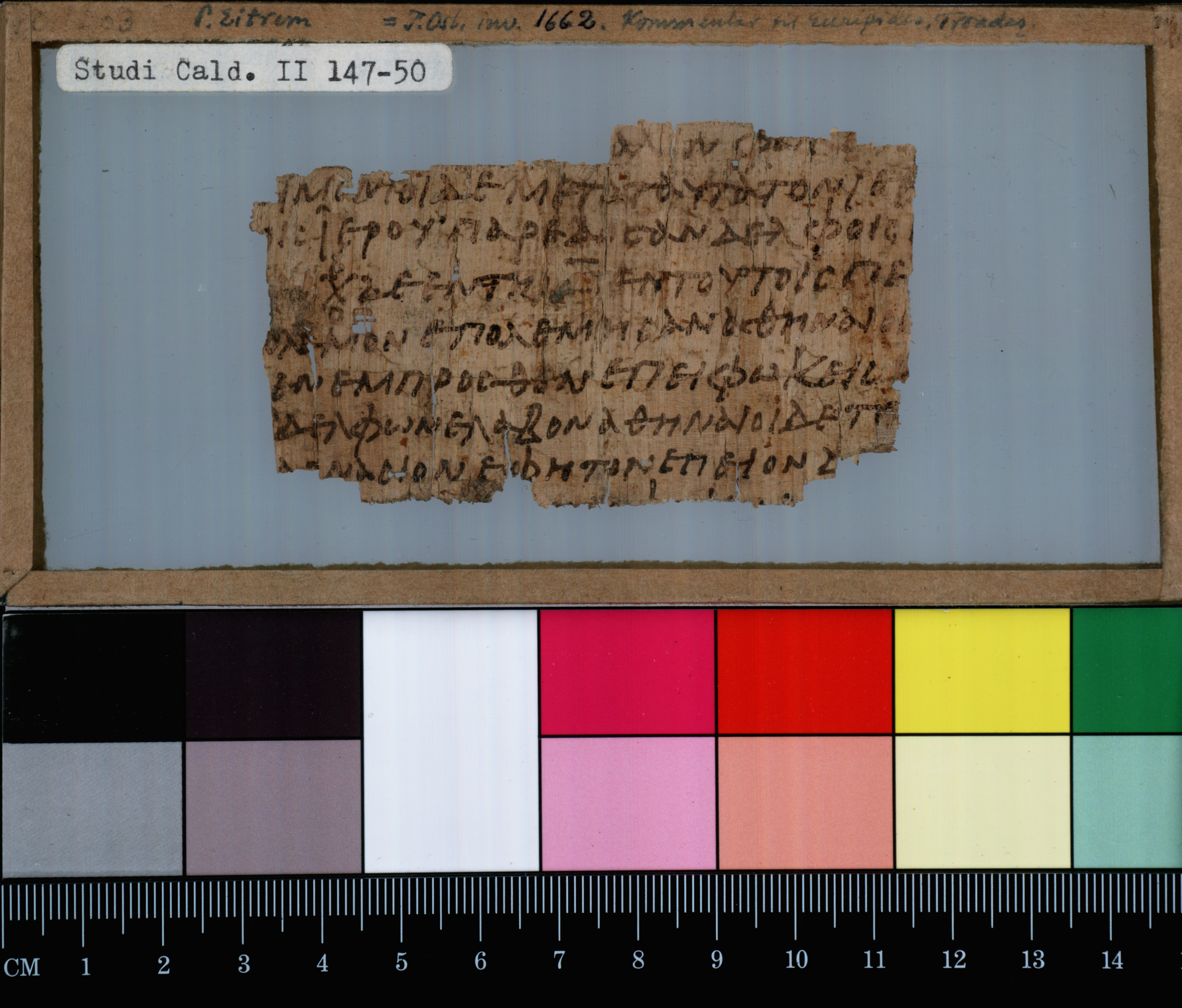
P. Oslo inv. 1662, a sixth-century papyrus fragment preserving a commentary on Euripides' Troiades (Trojan Women), lines 9–10. Found in Egypt and written in an informal Greek hand, the fragment overlaps substantially with the medieval scholion tradition while uniquely preserving a direct quotation from Thucydides (1.112.5) and a passage from Philochorus' Atthis absent from all other witnesses.

Trojan Women · Iphigenia among the Taurians · Ion

Three plays by Euripides — the lament of the vanquished in Trojan Women, a thriller of recognition and escape in Iphigenia among the Taurians, and a meditation on divine paternity and civic identity in Ion — representing the full range of his dramatic imagination.
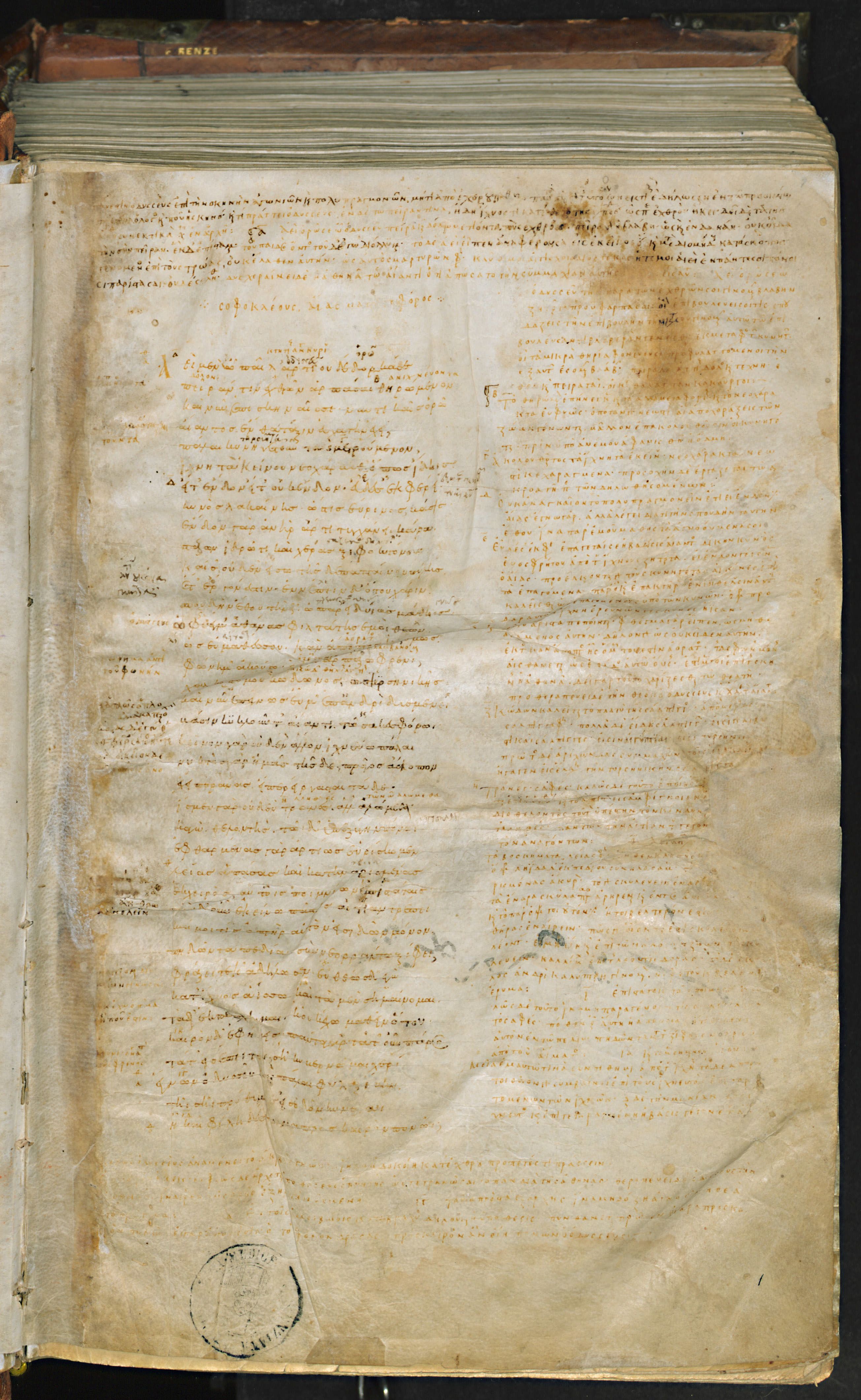
A page from the Medicean manuscript (Laurentianus 32.9), the oldest and most authoritative witness to the surviving plays of Aeschylus, written in Constantinople around 1000 CE. The manuscript preserves the seven plays transmitted under Aeschylus's name, including all three plays of the Oresteia.

The Oresteia Trilogy

Full text of Aeschylus's Oresteia — the only surviving ancient Greek tragic trilogy — tracing the House of Atreus from Agamemnon's murder through the founding of Athenian civic justice.