CYCLOPS
by Euripides
Translated by Arthur S. Way
The Cyclops is the only complete satyr play to survive from antiquity. Satyric drama was the fourth genre of the Athenian dramatic festivals, and an obligatory one: at the Great Dionysia each tragedian who competed presented three tragedies followed by a single satyr play, a shorter and broader piece performed by a chorus of satyrs — the goat-eared, horse-tailed, perpetually drunk and lecherous followers of Dionysus — under the leadership of their father, the old reprobate Silenus. The satyr play burlesqued heroic and tragic myth, often the very stories the preceding tragedies had treated in earnest, releasing the audience from the day's accumulated terror into laughter, obscenity, and the broad physical comedy of the satyr chorus. Hundreds were written. Of all of them, only Euripides' Cyclops has come down to us entire; everything else — including the substantial remains of Aeschylus's and Sophocles' satyr plays — survives in fragments, recovered largely from papyri in the twentieth century. Without this one play, the genre would be known only in scraps and secondhand descriptions.
Its subject is the most famous monster-story in Homer: the episode of Odysseus and Polyphemus from Book 9 of the Odyssey. Euripides relocates the action to Sicily, near Mount Etna, where Silenus and his satyr sons have been shipwrecked and enslaved by the one-eyed, man-eating Cyclops. Odysseus arrives in search of provisions, falls into the giant's clutches, and engineers the same escape the epic records — intoxicating Polyphemus with wine, blinding him with a sharpened stake, and slipping past him under the famous alias Outis, "Nobody." But the tragic and the heroic are systematically deflated. The satyrs, who promise to help heave the burning stake, collapse into cowardly excuses at the decisive moment; Silenus pilfers the wine and lies about it; and the Cyclops, before his blinding, delivers a startling speech of sophistic self-justification, a parody of contemporary intellectual fashion in which gluttony is dressed up as philosophy. The Homeric materials are present in full, but tipped throughout toward farce.
The play is generally dated late in Euripides' career, around 408 BCE, though the evidence is not decisive and its companion tragedies cannot be identified. Brief, fast, and verbally brilliant, it is at once a precious document — the single surviving specimen of an entire art form — and a genuine comic achievement: a sustained joke about heroism, appetite, drink, and language, told by the drunken demigods who stood at the margins of every tragic festival and, here alone, hold the stage entire.
Further Reading
Translations
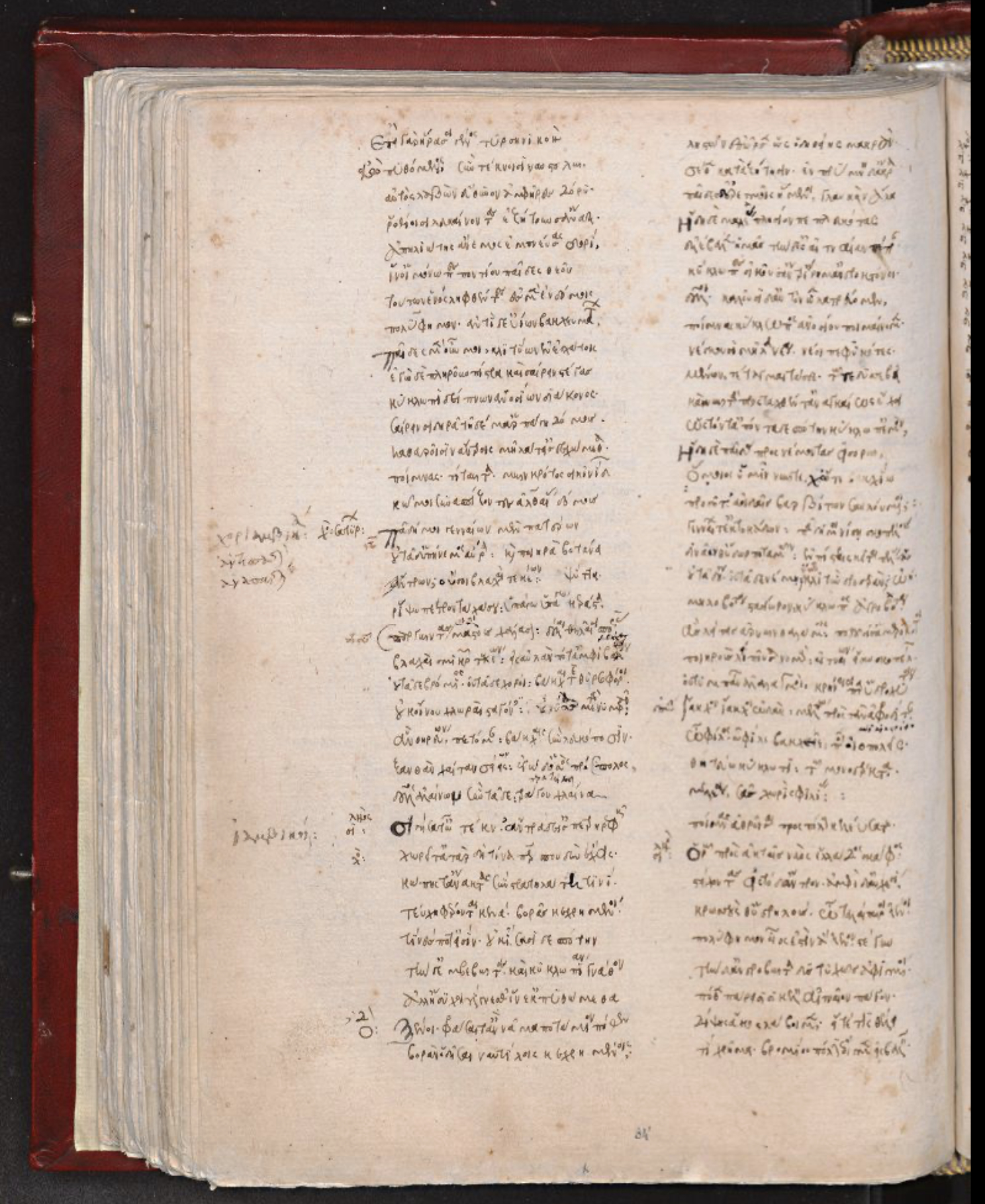
David Kovacs (Loeb Classical Library, vol. I, 1994) — the standard modern bilingual edition, with Greek text on facing pages; Cyclops opens the first volume of Kovacs's six-volume Euripides, alongside Alcestis and Medea. The prose translation is accurate and unobtrusive, and the textual notes are essential for readers working from a play whose transmission hangs on a single manuscript.
Arthur S. Way (Loeb Classical Library, 1912) — the verse translation reproduced here, the standard English Euripides for the early twentieth century. Way renders the play into fluent, archaizing English verse; his version is dated in idiom but conveys the briskness of the action and remains valuable as the rendering most readily available with the facing Greek of the original Loeb set.
William Arrowsmith, Cyclops, in The Complete Greek Tragedies: Euripides (University of Chicago Press, 1956) — a lively, idiomatic verse translation that does more than most to recover the play's coarseness and comic energy. Arrowsmith's introduction is a spirited short defense of satyric drama as something more than a curiosity, and the version reads well aloud and in performance.
Heather McHugh, Cyclops, in Euripides, 4 (University of Pennsylvania Press, 1999) — a poet's translation, supple and inventive, attentive to the play's shifts between lyric, burlesque, and parody. Useful as a contemporary counterpart to the older verse renderings and for readers who want the comedy to land in modern English.
Introductions and General Studies
Richard Seaford, "The Satyric Drama," in Euripides: Cyclops (Oxford, 1984) — the long introduction to Seaford's commentary is the single most important account in English of satyric drama as a genre: its origins, its festival function, its conventions of chorus and costume, and its relationship to tragedy and comedy. Indispensable, and the natural place to begin.
Dana F. Sutton, The Greek Satyr Play (Hain, 1980) — the first comprehensive modern study of the genre, surveying its history, its surviving texts and fragments, and its formal characteristics. Superseded in places by later scholarship but still a useful orientation to satyric drama as a whole, with Cyclops at its center as the only complete example.
Carl A. Shaw, Satyric Play: The Evolution of Greek Comedy and Satyr Drama (Oxford, 2014) — examines the close and complicated relationship between satyric drama and Old Comedy, arguing that the two genres developed in dialogue with one another. Particularly illuminating on what Cyclops shares with, and how it differs from, the comedy of Aristophanes.
Mark Griffith, Greek Satyr Play: Five Studies (California Classical Studies, 2015) — a collection of searching essays on the genre by one of its leading interpreters, covering the satyrs' distinctive ethos, their theatrical function, and the place of satyric drama within the festival. The most stimulating recent thinking on what the satyr play was for.
Patrick O'Sullivan and Christopher Collard, Euripides: Cyclops and Major Fragments of Greek Satyric Drama (Aris & Phillips, 2013) — gathers Cyclops together with the most substantial fragments of satyric drama by Aeschylus, Sophocles, and others, with facing translation, introduction, and commentary. The best single volume for situating the one complete play within the genre it represents.
Commentaries
Richard Seaford, Euripides: Cyclops (Oxford, 1984) — the standard scholarly commentary, authoritative on text, language, staging, and the conventions of satyric drama. Seaford is especially good on the religious and Dionysiac dimensions of the play and on the relationship between the satyr chorus and the festival in which it performed. The essential edition for serious study.
Richard Hunter and Rebecca Lämmle, Euripides: Cyclops (Cambridge Greek and Latin Classics, 2020) — the most recent major commentary, exhaustive and learned, with full treatment of the play's language, metre, mythological allusion, and performance, and a substantial reconsideration of its date in favor of 408 BCE. Where Seaford has long been the standard, Hunter and Lämmle now stand beside him as the fullest modern account.
The Play in Performance and Reception
Tony Harrison, The Trackers of Oxyrhynchus (Faber, 1990) — not a staging of Cyclops but the landmark modern engagement with satyric drama: Harrison's verse play, built around the papyrus fragments of Sophocles' satyr play Ichneutae discovered at Oxyrhynchus, dramatizes the genre's near-total loss and recovers the satyr chorus for the contemporary stage. The most significant reckoning in modern theatre with what satyric drama was and what its disappearance means.
Edith Hall, Fiona Macintosh, and Oliver Taplin, eds., Medea in Performance 1500–2000 and the wider Oxford reception scholarship — though Cyclops itself is rarely revived, the Archive of Performances of Greek and Roman Drama at Oxford documents the modern stage history of Euripides, including the occasional production of Cyclops and the broader revival of satyric and Dionysiac performance. Useful for tracing why the only complete satyr play has remained, paradoxically, among the least often staged.
Carl A. Shaw, "Satyr Plays on the Modern Stage," in The Reception of Greek and Roman Drama (various venues) — surveys the small but growing tradition of modern attempts to revive or reinvent satyric performance, from Harrison's Trackers onward, and the particular challenges of staging a genre whose conventions of obscenity, chorus, and costume are so remote from modern theatrical norms.