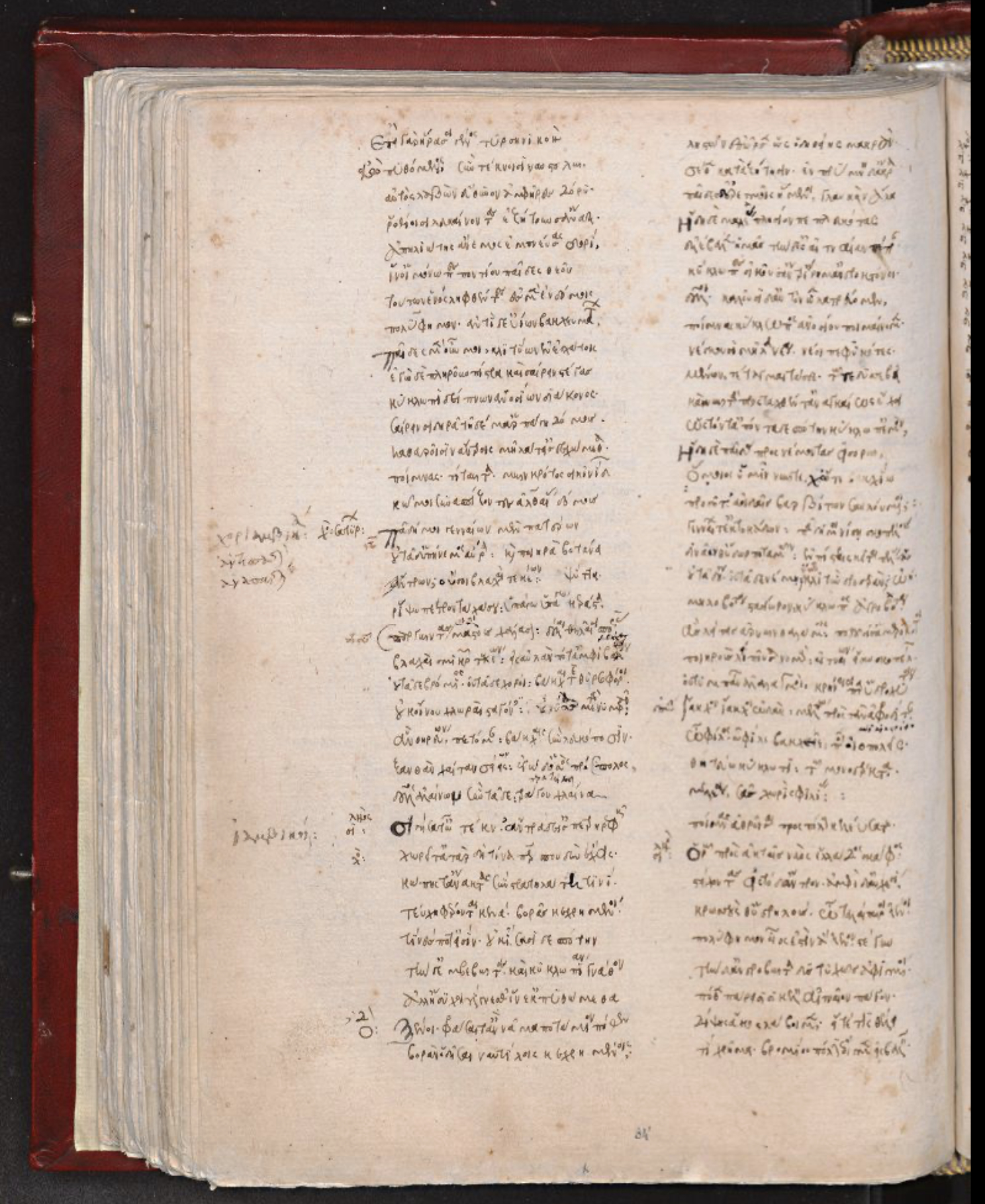
A page from Laurentianus plut. 32.2 (Biblioteca Medicea Laurenziana, Florence), the early-fourteenth-century paper manuscript that is the sole medieval witness to Euripides' Cyclops and the other 'alphabetic plays.' Written in a scholar's Greek hand around 1300–1325 and corrected by the Byzantine scholar Demetrius Triclinius, the codex is the only reason the only complete satyr play from antiquity survives.

Cyclops

Euripides' Cyclops — the only complete satyr play to survive from antiquity — a burlesque of Odysseus's escape from Polyphemus, performed by a chorus of satyrs and their father Silenus, and the sole intact witness to the fourth genre of the Athenian stage.
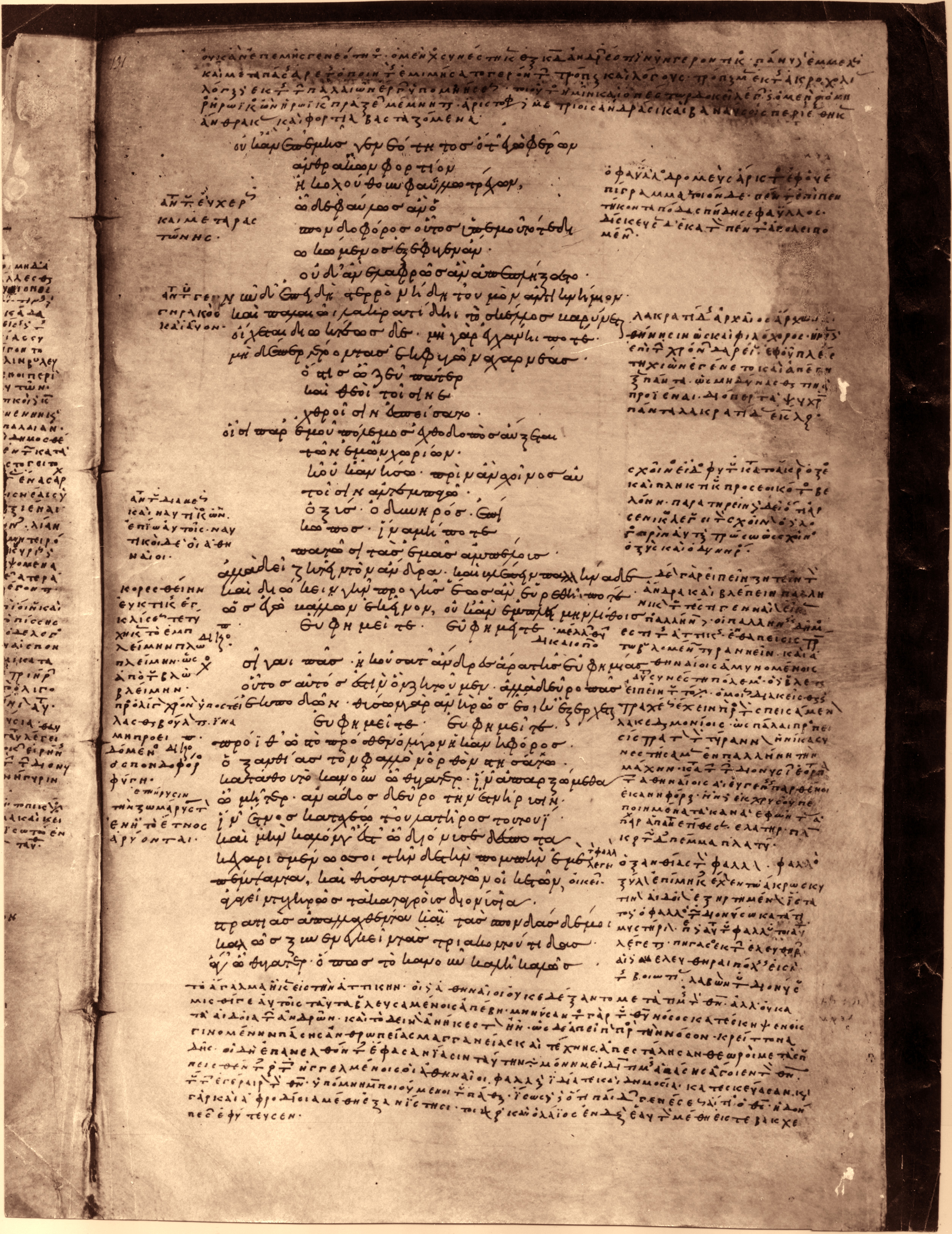
A page from Codex Ravennas 429 (Biblioteca Classense, Ravenna), the mid-tenth-century manuscript that is the oldest and only medieval witness to all eleven surviving comedies of Aristophanes. Written in Greek minuscule around 950 CE with scholia in the margins, the codex is the sole source from which the Thesmophoriazusae and roughly a quarter of the Lysistrata survive the Middle Ages.

Lysistrata · Thesmophoriazusae · Ecclesiazusae · Plutus

Four comedies of Aristophanes — the sex-strike politics of Lysistrata, the festival travesty of Thesmophoriazusae, the communist fantasy of Ecclesiazusae, and the redistributive dream of Plutus — spanning Old Comedy at its height and the threshold of its transformation.

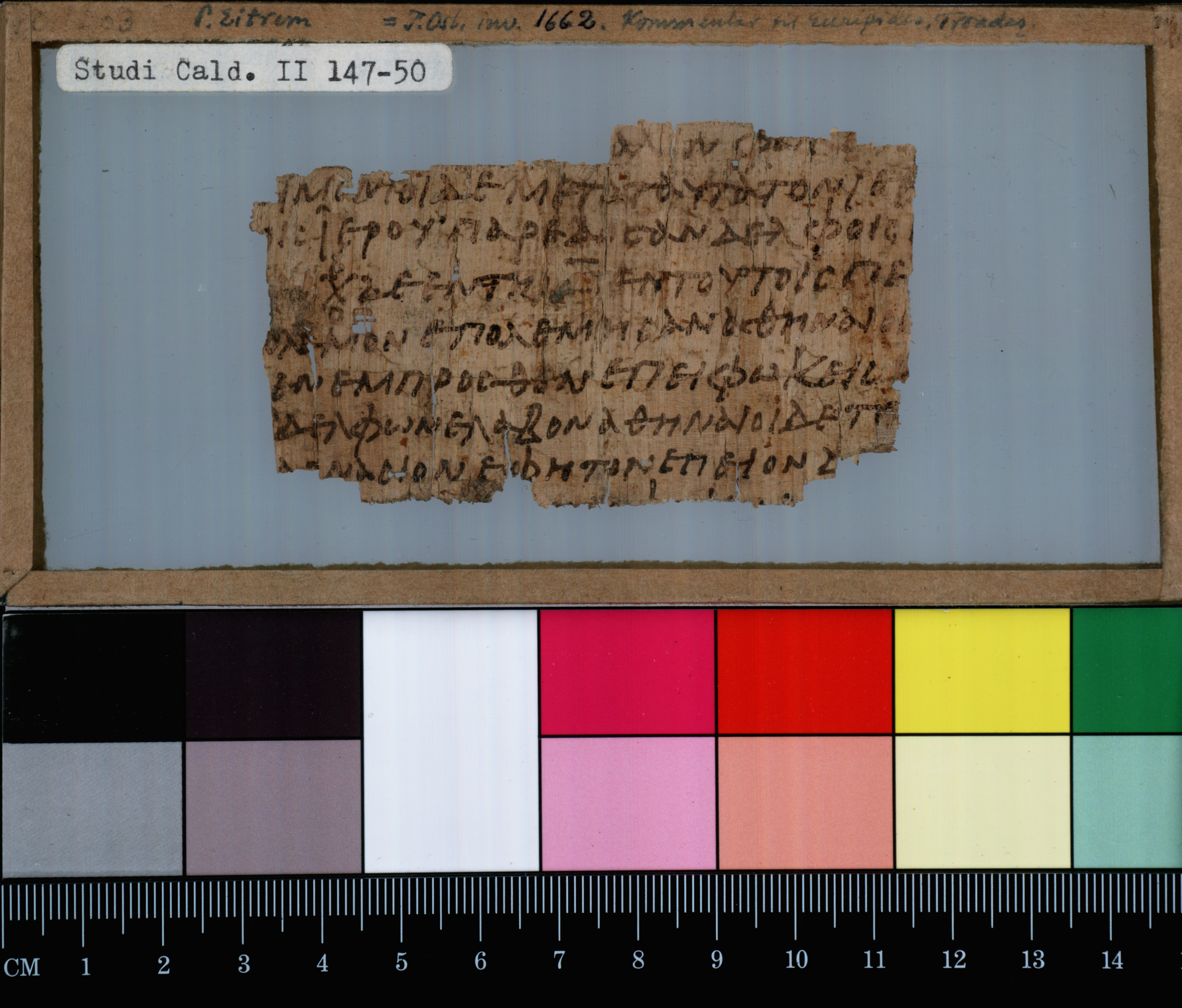
P. Oslo inv. 1662, a sixth-century papyrus fragment preserving a commentary on Euripides' Troiades (Trojan Women), lines 9–10. Found in Egypt and written in an informal Greek hand, the fragment overlaps substantially with the medieval scholion tradition while uniquely preserving a direct quotation from Thucydides (1.112.5) and a passage from Philochorus' Atthis absent from all other witnesses.

Trojan Women · Iphigenia among the Taurians · Ion

Three plays by Euripides — the lament of the vanquished in Trojan Women, a thriller of recognition and escape in Iphigenia among the Taurians, and a meditation on divine paternity and civic identity in Ion — representing the full range of his dramatic imagination.

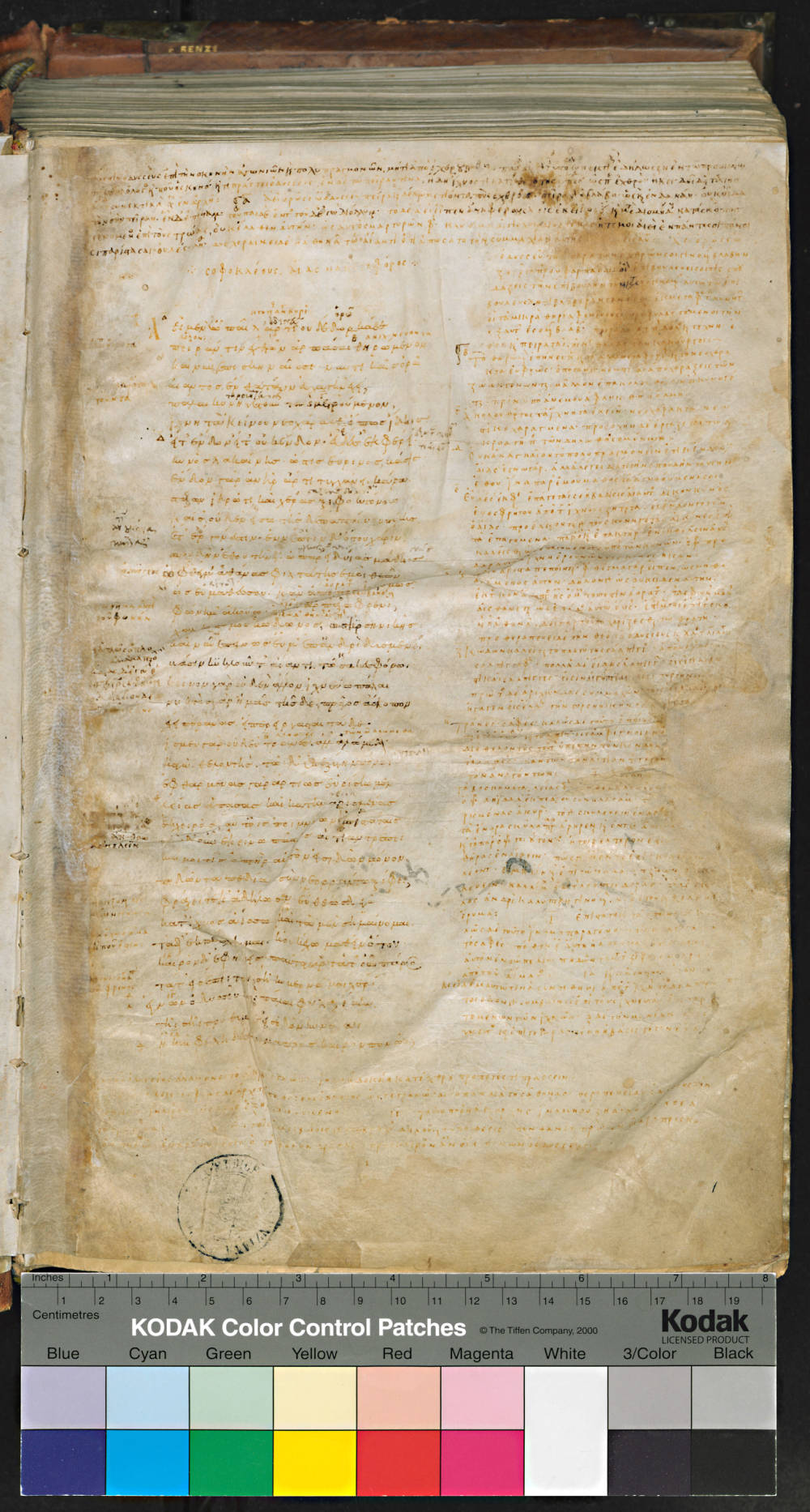
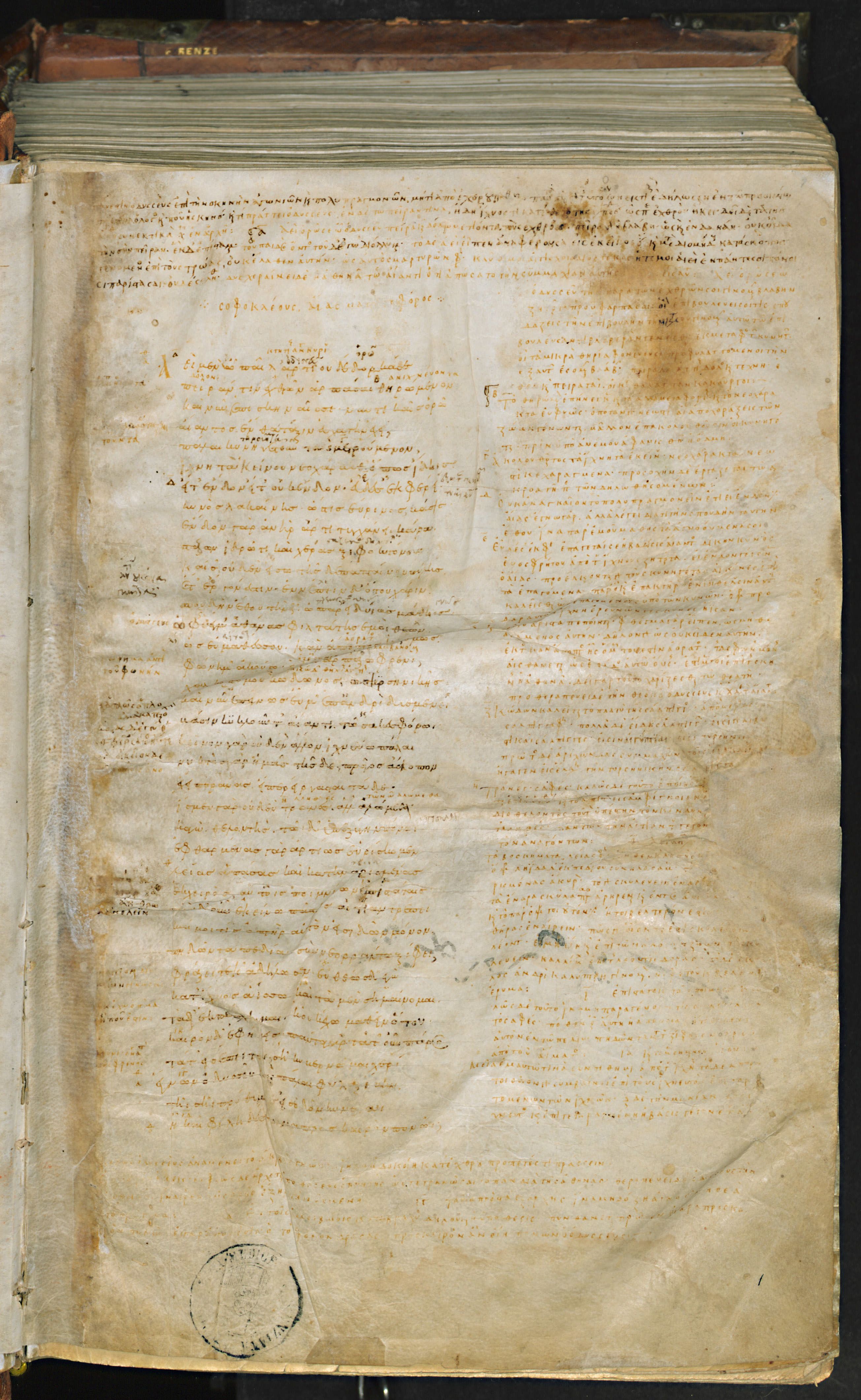
Florence, Biblioteca Medicea Laurenziana, Plut. 32.9 (Codex Laurentianus), fol. 1r — opening of Sophocles' Ajax in Byzantine minuscule, 10th–11th century

Sophocles I: Oedipus the King, Oedipus at Colonus, Antigone

Reading companion and full text of Sophocles, Volume I (Loeb Classical Library 20), translated by F. Storr — the three Theban plays in the order they appear in the manuscript tradition: Oedipus the King, the founding masterpiece of tragic recognition; Oedipus at Colonus, the poet's final work, produced posthumously; and Antigone, the first of the three to be composed and the one in which the conflict between divine and human law receives its definitive dramatic statement.

A page from the Medicean manuscript (Laurentianus 32.9), the oldest and most authoritative witness to the surviving plays of Aeschylus, written in Constantinople around 1000 CE. The manuscript preserves the seven plays transmitted under Aeschylus's name, including all three plays of the Oresteia.

The Oresteia Trilogy

Full text of Aeschylus's Oresteia — the only surviving ancient Greek tragic trilogy — tracing the House of Atreus from Agamemnon's murder through the founding of Athenian civic justice.

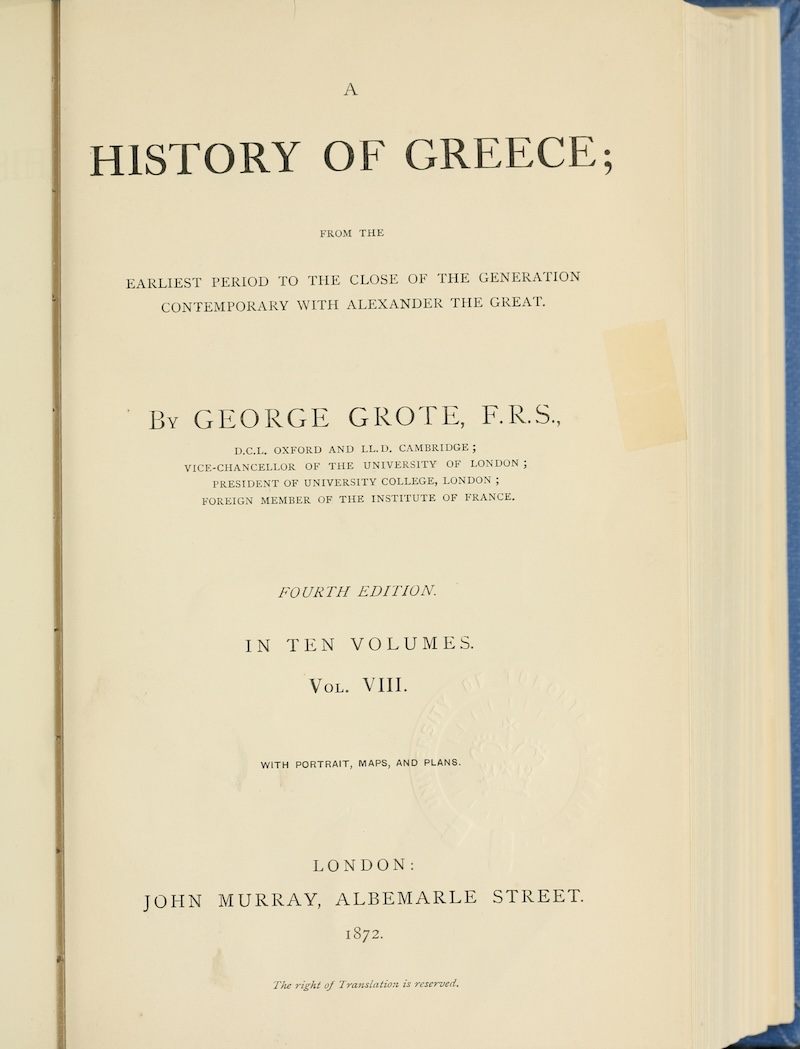
Title page of Vol. 8 of 1872's fourth edition, where Chapter LXVII is located.

History of Greece

Chapter LXVII of George Grote's monumental History of Greece — examining the flowering of Athenian drama alongside the rise of rhetoric, dialectics, and the Sophist movement.