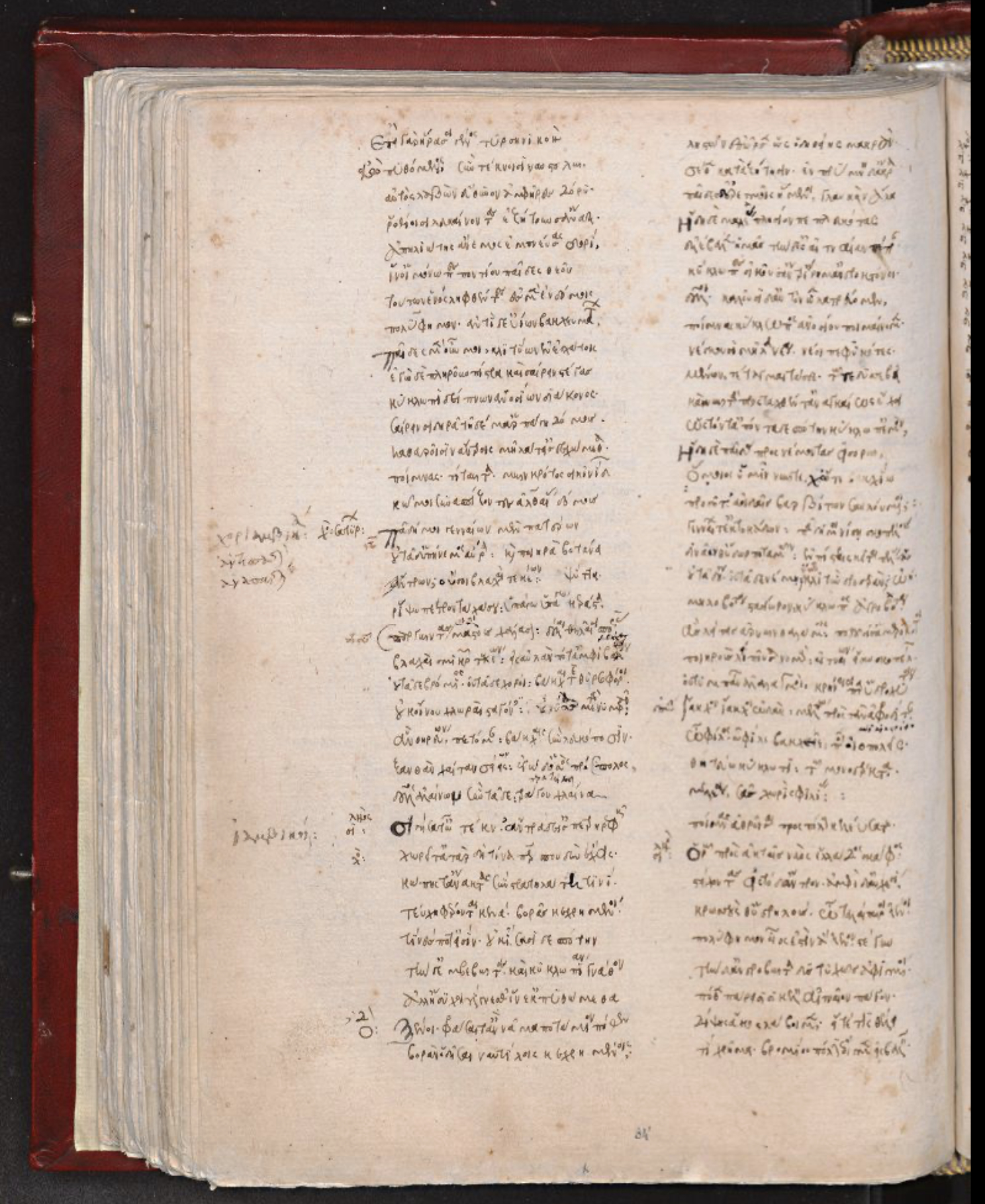
A page from Laurentianus plut. 32.2 (Biblioteca Medicea Laurenziana, Florence), the early-fourteenth-century paper manuscript that is the sole medieval witness to Euripides' Cyclops and the other 'alphabetic plays.' Written in a scholar's Greek hand around 1300–1325 and corrected by the Byzantine scholar Demetrius Triclinius, the codex is the only reason the only complete satyr play from antiquity survives.

Cyclops

Euripides' Cyclops — the only complete satyr play to survive from antiquity — a burlesque of Odysseus's escape from Polyphemus, performed by a chorus of satyrs and their father Silenus, and the sole intact witness to the fourth genre of the Athenian stage.
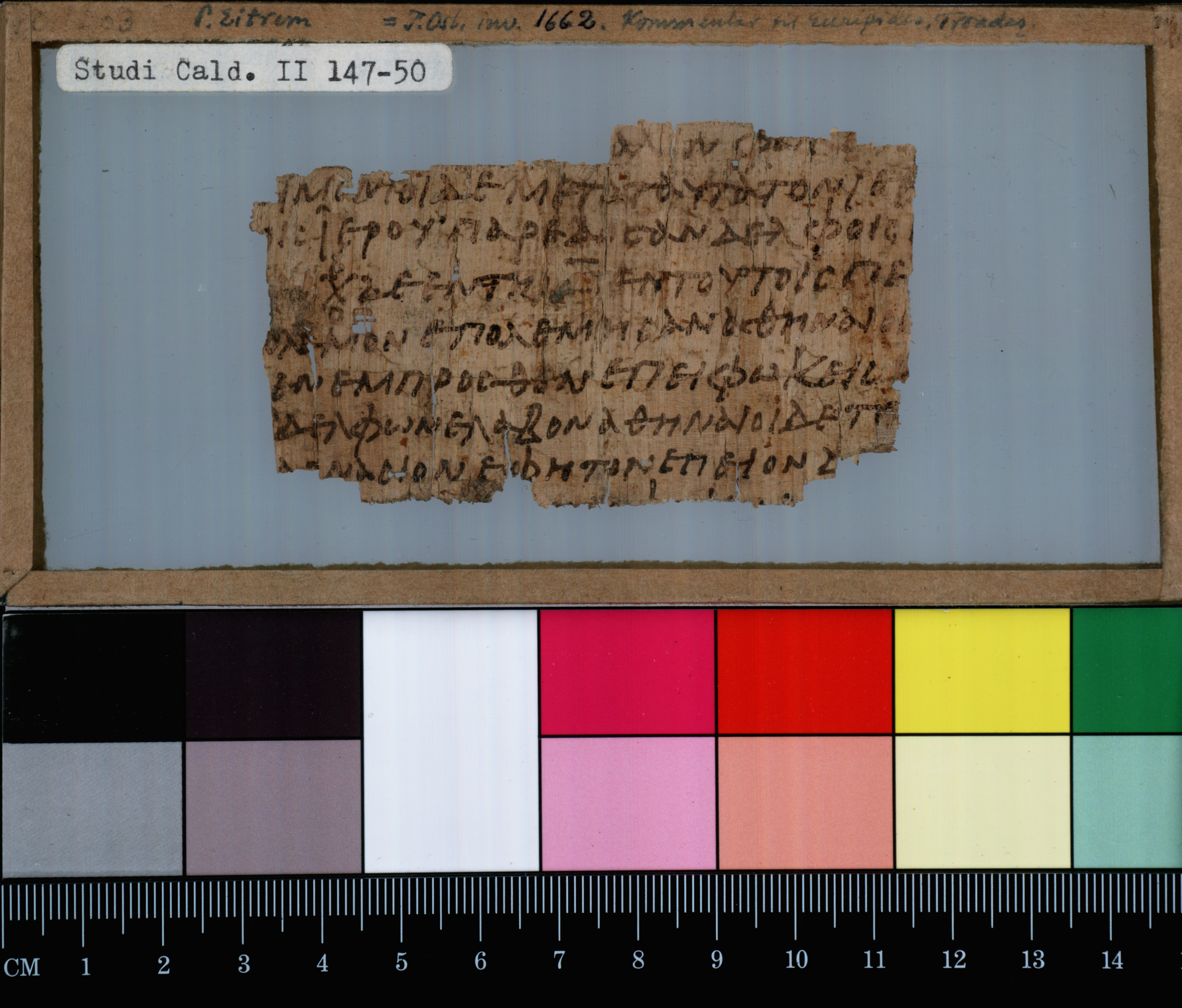
P. Oslo inv. 1662, a sixth-century papyrus fragment preserving a commentary on Euripides' Troiades (Trojan Women), lines 9–10. Found in Egypt and written in an informal Greek hand, the fragment overlaps substantially with the medieval scholion tradition while uniquely preserving a direct quotation from Thucydides (1.112.5) and a passage from Philochorus' Atthis absent from all other witnesses.

Trojan Women · Iphigenia among the Taurians · Ion

Three plays by Euripides — the lament of the vanquished in Trojan Women, a thriller of recognition and escape in Iphigenia among the Taurians, and a meditation on divine paternity and civic identity in Ion — representing the full range of his dramatic imagination.