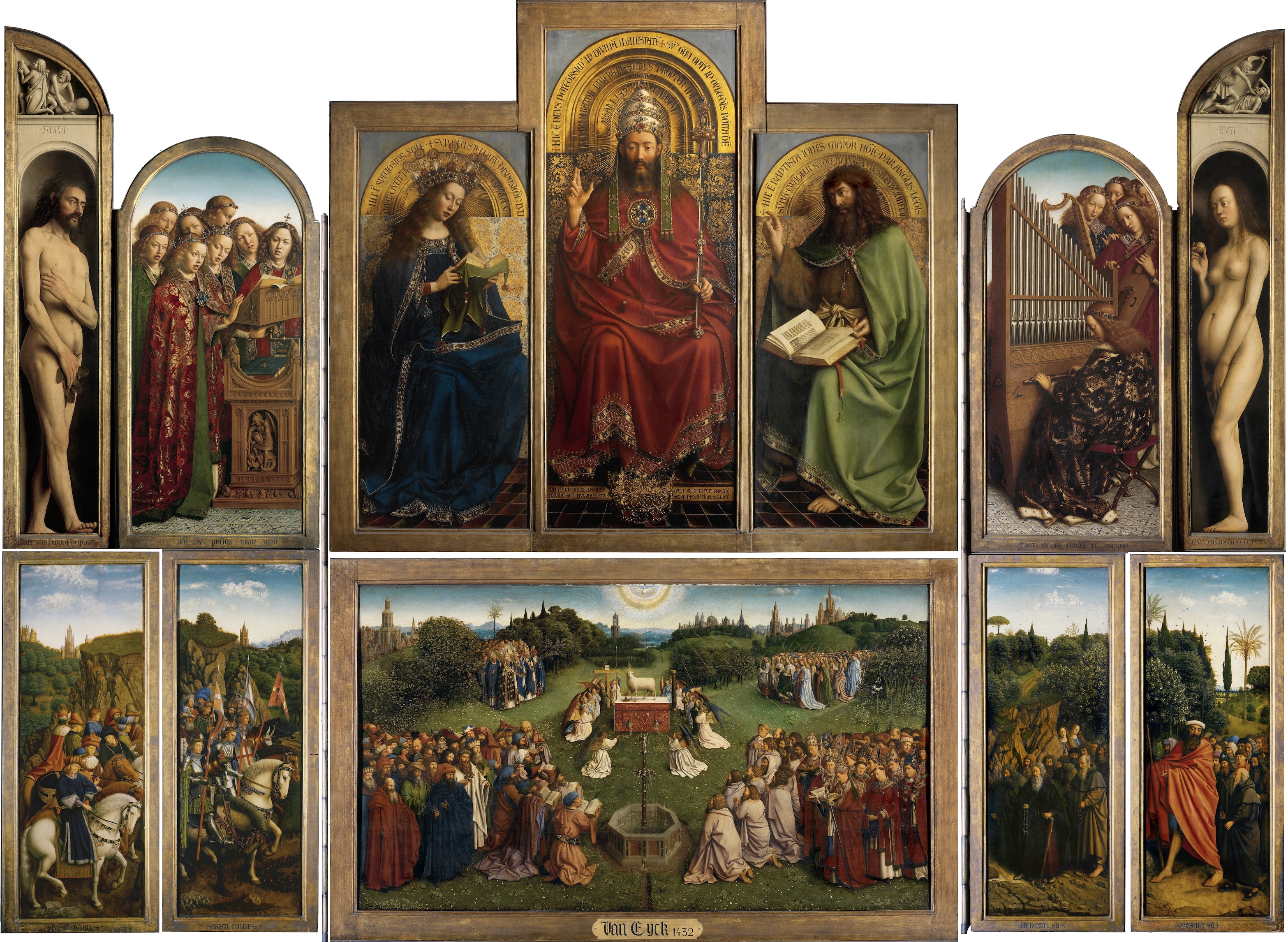
Johan Huizinga, The Waning of the Middle Ages: A Study of the Forms of Life, Thought and Art in France and the Netherlands in the XIVth and XVth Centuries. First published in Dutch as Herfsttij der Middeleeuwen, Haarlem: H.D. Tjeenk Willink, 1919. English translation by F. Hopman, London: Edward Arnold, 1924. This text is in the public domain. The Waning of the Middle Ages takes the Burgundian court of the fourteenth and fifteenth centuries as its stage, and reads the forms of its life — chivalry, devotion, love, death, art — as the signs of a civilization that had exhausted its creative energies and was elaborating, with magnificent intensity, the very forms that were about to dissolve.
The Waning of the Middle Ages
Johan Huizinga
Johan Huizinga (1872–1945) held the chair of History at the University of Leiden and was the foremost Dutch historian of his generation — and one of the most original historians of the twentieth century in any language. His range extended from medieval cultural history to the theory of play (Homo Ludens, 1938), and he remained committed throughout his career to history as a humanistic discipline, attentive to image, symbol, and feeling as much as to event and institution. He died in German internment in 1945, weeks before the liberation of the Netherlands.
The Waning of the Middle Ages is his masterpiece. Published in 1919, in the immediate aftermath of one civilization's catastrophe, it reads the late medieval world through the lens of its emotional life: the violence and tenderness, the religious terror and erotic refinement, the craving for beauty and the omnipresence of death. Where earlier historians had treated the Burgundian courts of Philip the Good and Charles the Bold as a prelude to the Renaissance, Huizinga insisted they were something else — the autumn of a civilization, gorgeous and overripe, in which the forms of chivalry, devotion, and courtly love had become ends in themselves, detached from the vital impulses that had once animated them.
The book's method is as remarkable as its argument. Huizinga builds his picture not from political narrative but from the texture of life: sermons and chronicles, tapestries and altarpieces, tournament regulations and dance-of-death imagery. Jan van Eyck and the Limbourg brothers are read alongside Froissart and Chastellain. The result anticipates, by decades, what would later be called cultural history or the history of mentalités — though Huizinga's prose carries a literary density and melancholy that no school of historiography has quite replicated.