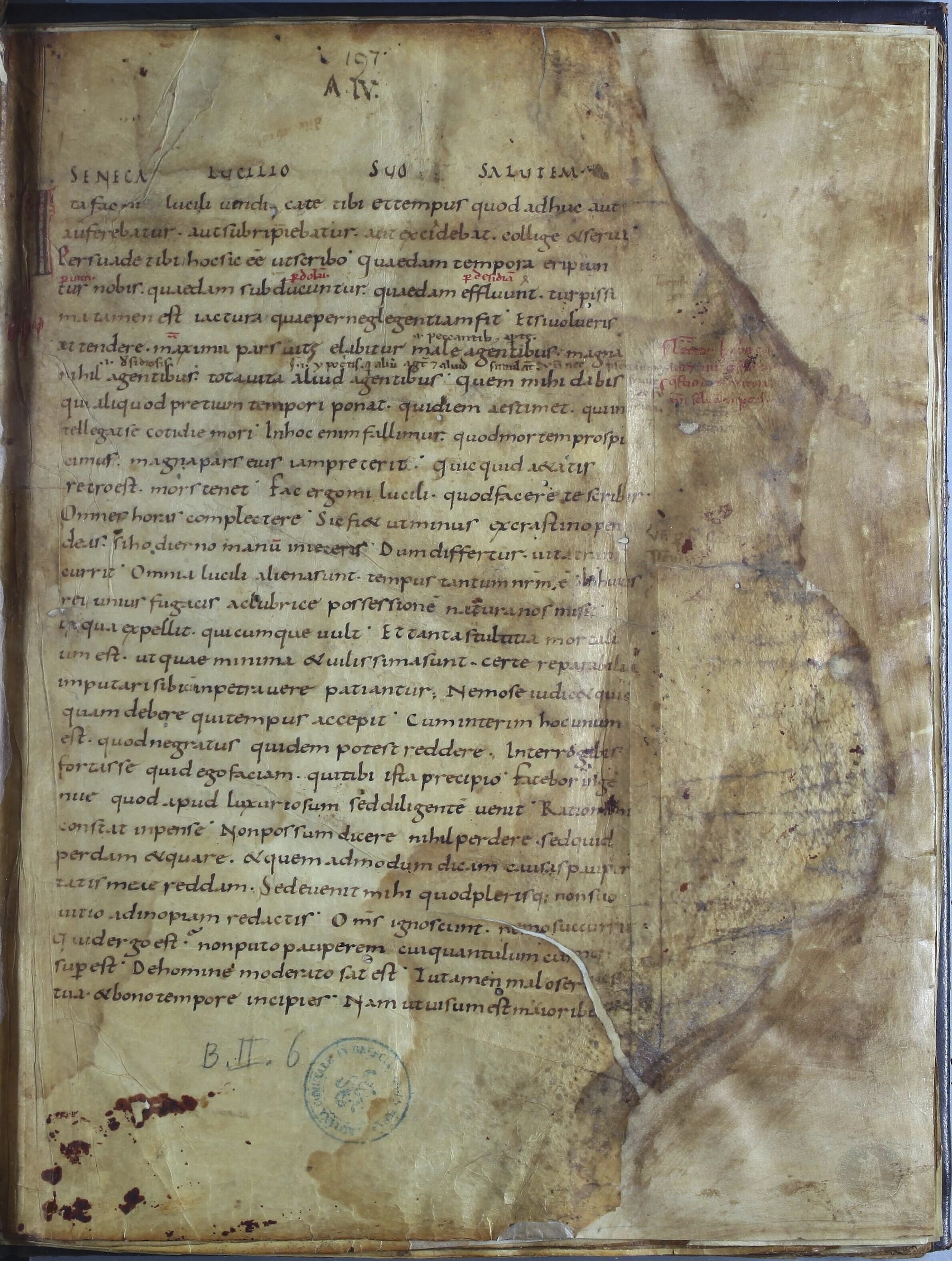
Brescia, Biblioteca Queriniana, ms. B.II.6 (Codex Quirinianus), fol. 1r — opening of the second collection of the Epistulae Morales, 11th–12th century

Epistles 93–124

Reading companion and full text of Seneca's Epistulae Morales ad Lucilium, Volume VI (Epistles 93–124), translated by Richard M. Gummere — the concluding portion of Seneca's great letter-collection, written in the final years of his life under Nero, addressing questions of death, virtue, the good life, the value of precepts, and the relationship between philosophy and action.
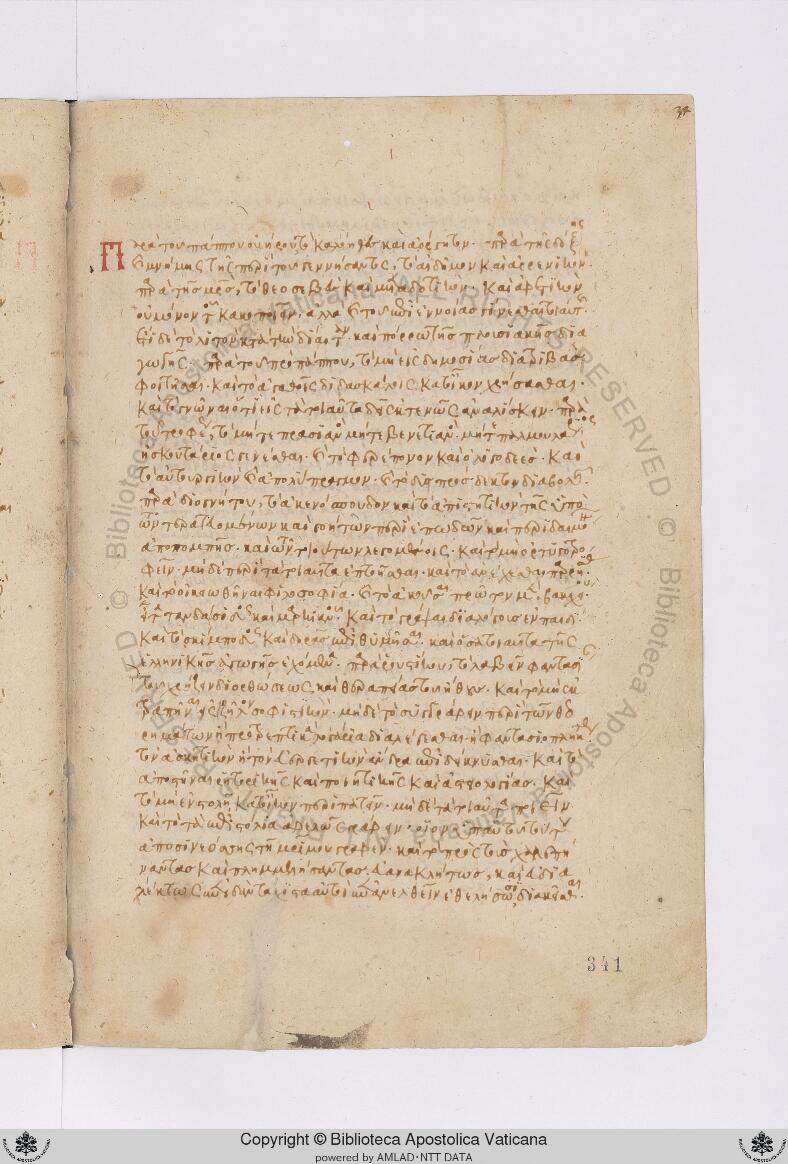
Vatican City, Biblioteca Apostolica Vaticana, Vat. gr. 1950, fol. 341r — opening of the Meditations of Marcus Aurelius, 14th century

Meditations

Reading companion and full text of the Meditations of Marcus Aurelius, translated by George Long and introduced by W. L. Courtney, in the Blackie and Son edition — twelve books of private philosophical notes written in Koine Greek by the Roman Emperor during the last decade of his life, never intended for publication, and representing the most intimate record of Stoic practice in the ancient world.

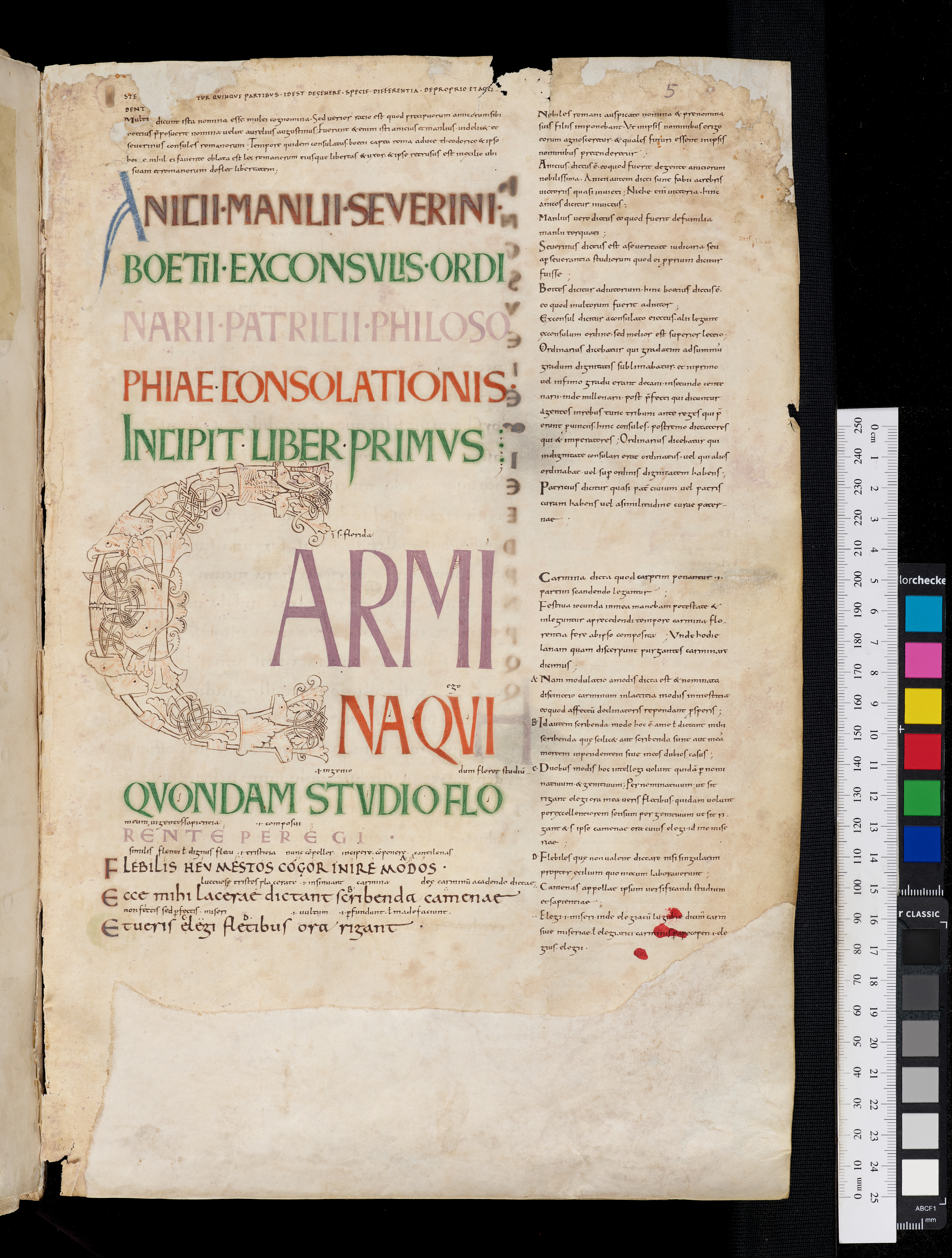
Oxford, Bodleian Library, MS. Auct. F. 1. 15, fol. 5r — Boethius, De consolatione philosophiae, with commentary and gloss, late 10th century, Canterbury, St. Augustine's Abbey

The Theological Tractates · The Consolation of Philosophy

Reading companion and full text of Boethius: The Theological Tractates and The Consolation of Philosophy (Loeb Classical Library 74), the Tractates translated by H. F. Stewart and E. K. Rand, the Consolation in the English translation of 'I. T.' (1609) revised by H. F. Stewart — the five opuscula sacra that attempt to reconcile Platonic philosophy with Christian theology, and the work Boethius composed in prison awaiting execution, which became the most widely read philosophical text of the medieval millennium.

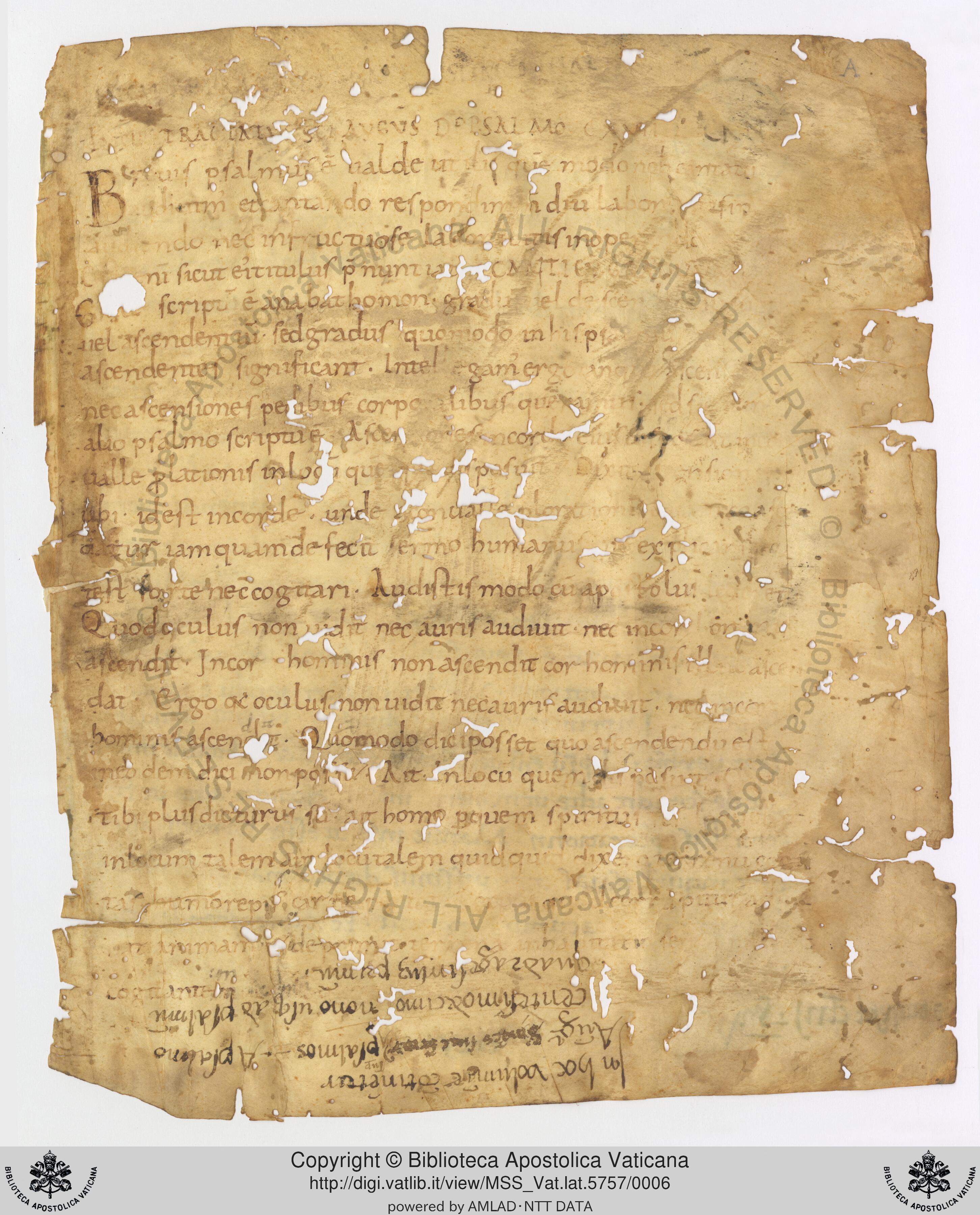
First page of Vat. lat. 5757, a palimpsest manuscript from Bobbio

De Re Publica

Reading companion and full text of Cicero's De Re Publica (On the Republic), translated by Clinton W. Keyes — a dialogue in six books examining the best form of government, the nature of justice, and the duties of the ideal statesman, culminating in the celebrated Dream of Scipio.