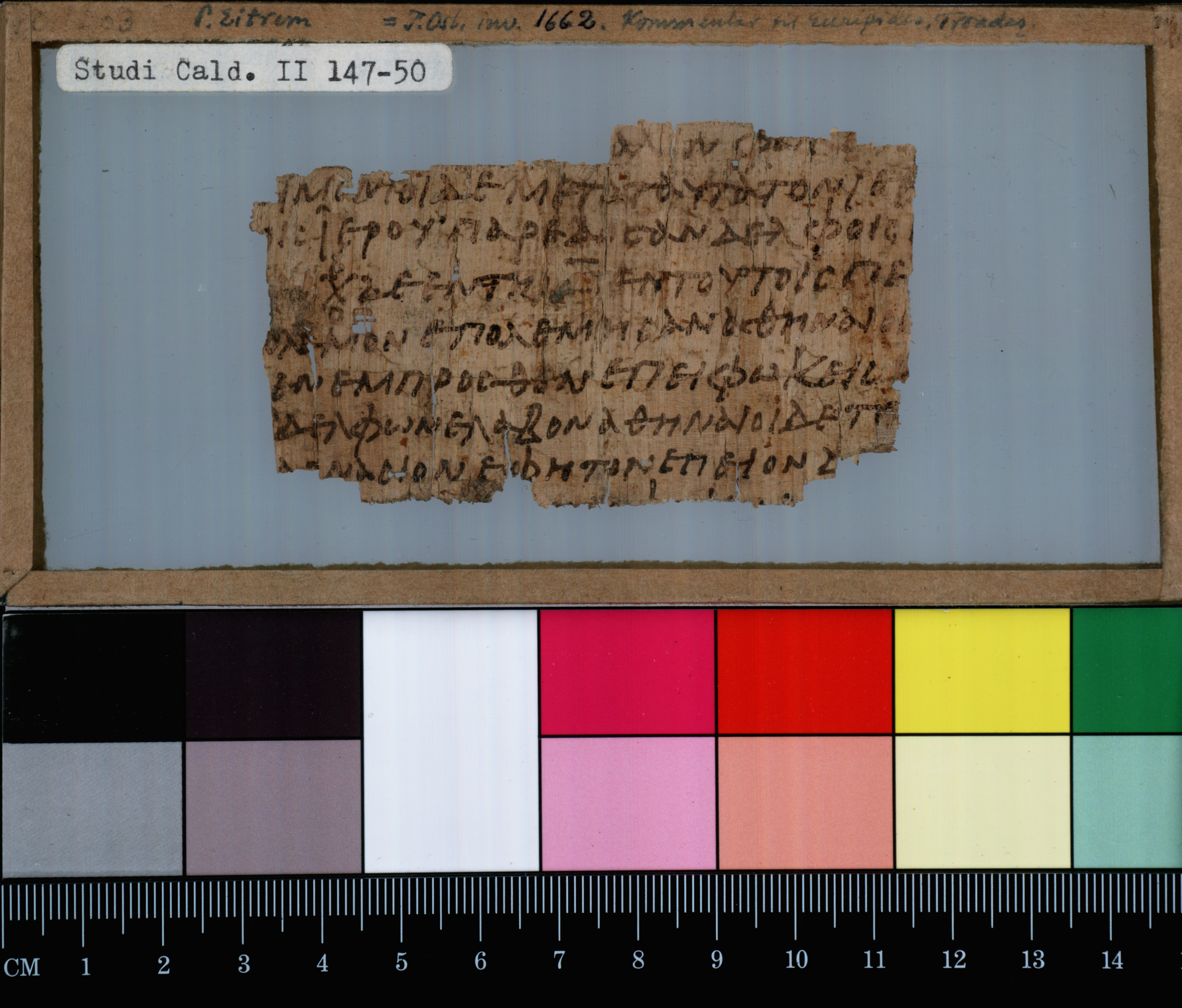
P. Oslo inv. 1662, a sixth-century papyrus fragment preserving a commentary on Euripides' Troiades (Trojan Women), lines 9–10. Found in Egypt and written in an informal Greek hand, the fragment overlaps substantially with the medieval scholion tradition while uniquely preserving a direct quotation from Thucydides (1.112.5) and a passage from Philochorus' Atthis absent from all other witnesses.

Trojan Women · Iphigenia among the Taurians · Ion

Three plays by Euripides — the lament of the vanquished in Trojan Women, a thriller of recognition and escape in Iphigenia among the Taurians, and a meditation on divine paternity and civic identity in Ion — representing the full range of his dramatic imagination.
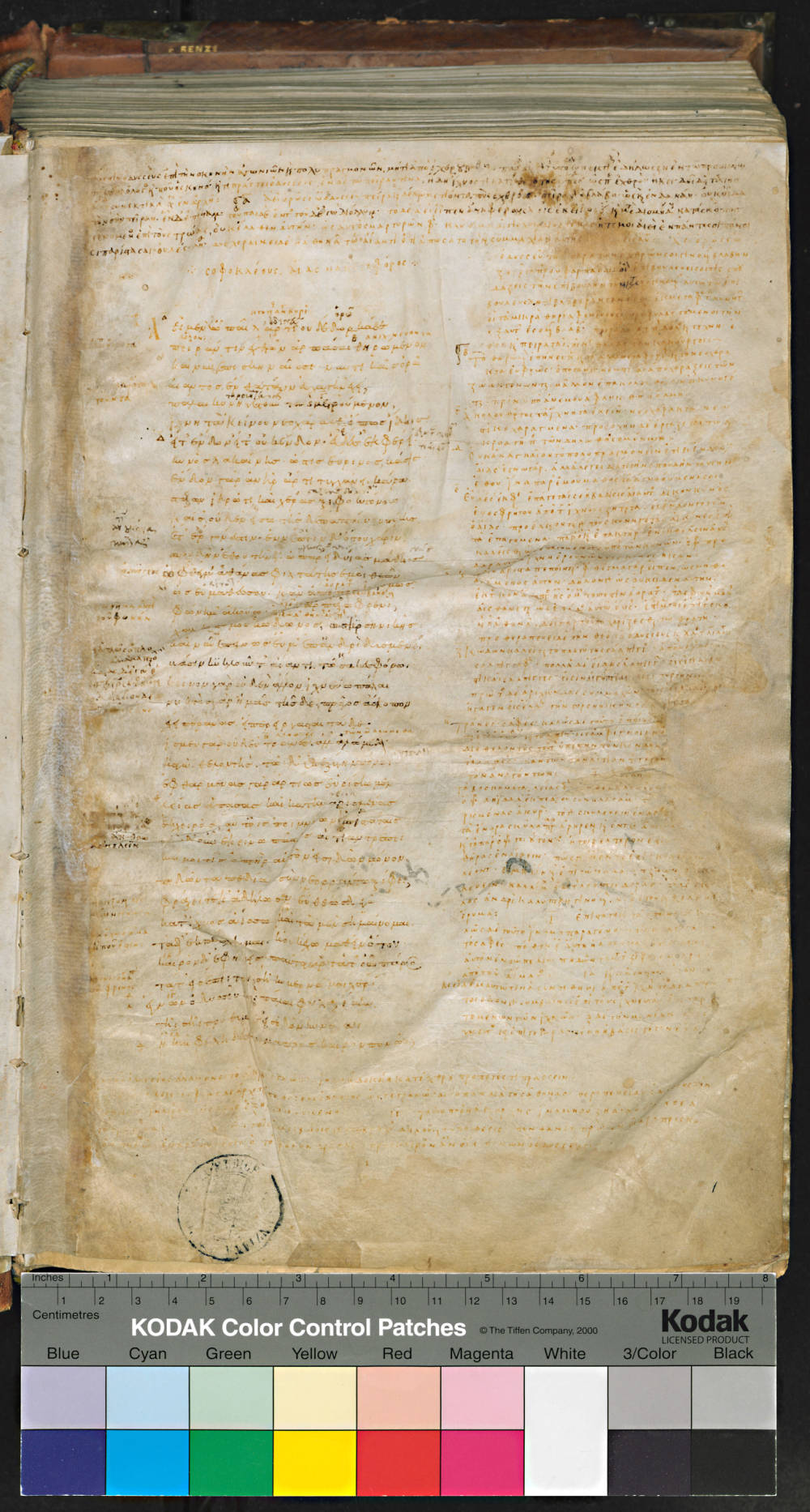
Florence, Biblioteca Medicea Laurenziana, Plut. 32.9 (Codex Laurentianus), fol. 1r — opening of Sophocles' Ajax in Byzantine minuscule, 10th–11th century

Sophocles I: Oedipus the King, Oedipus at Colonus, Antigone

Reading companion and full text of Sophocles, Volume I (Loeb Classical Library 20), translated by F. Storr — the three Theban plays in the order they appear in the manuscript tradition: Oedipus the King, the founding masterpiece of tragic recognition; Oedipus at Colonus, the poet's final work, produced posthumously; and Antigone, the first of the three to be composed and the one in which the conflict between divine and human law receives its definitive dramatic statement.