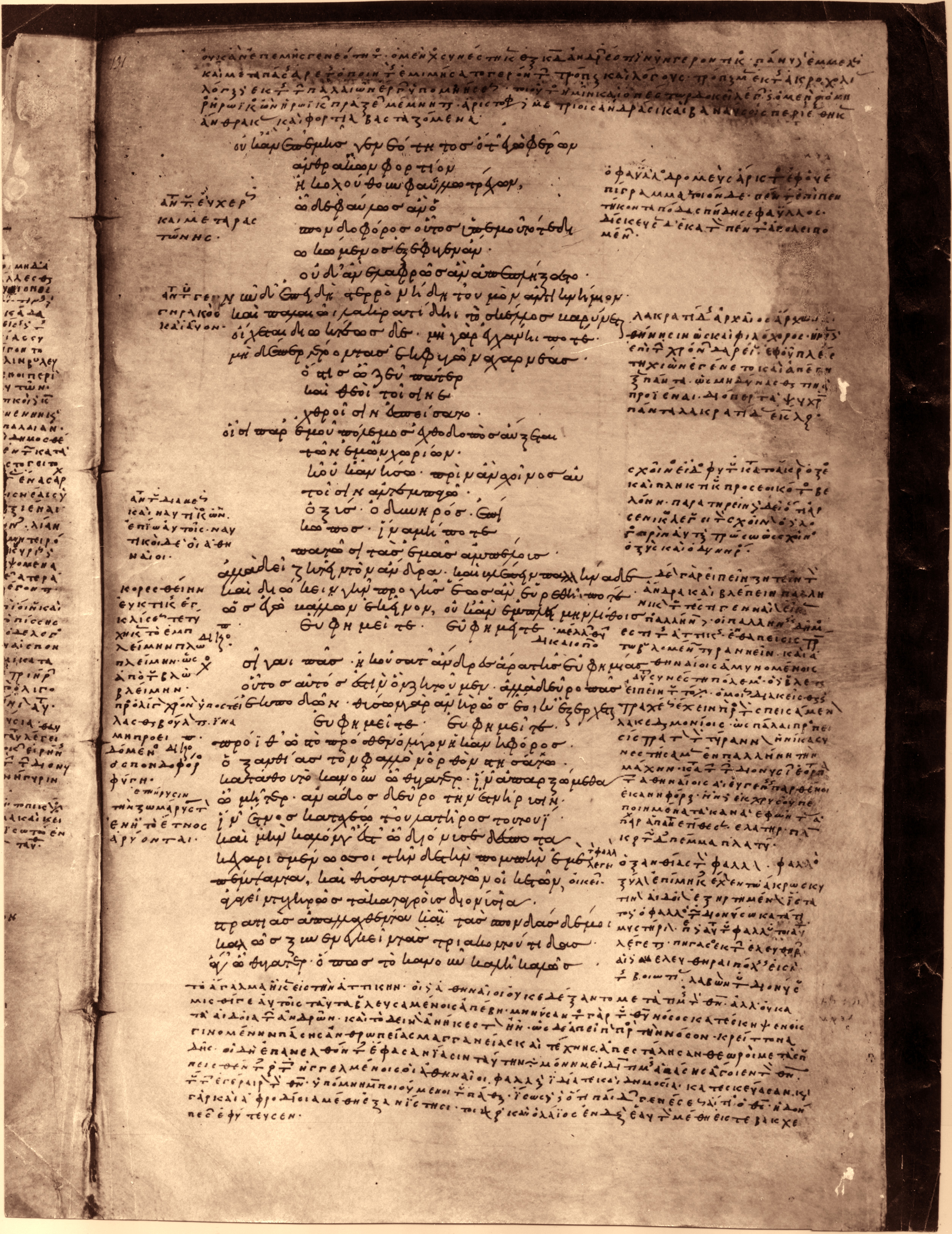
A page from Codex Ravennas 429 (Biblioteca Classense, Ravenna), the mid-tenth-century manuscript that is the oldest and only medieval witness to all eleven surviving comedies of Aristophanes. Written in Greek minuscule around 950 CE with scholia in the margins, the codex is the sole source from which the Thesmophoriazusae and roughly a quarter of the Lysistrata survive the Middle Ages.

Lysistrata · Thesmophoriazusae · Ecclesiazusae · Plutus

Four comedies of Aristophanes — the sex-strike politics of Lysistrata, the festival travesty of Thesmophoriazusae, the communist fantasy of Ecclesiazusae, and the redistributive dream of Plutus — spanning Old Comedy at its height and the threshold of its transformation.
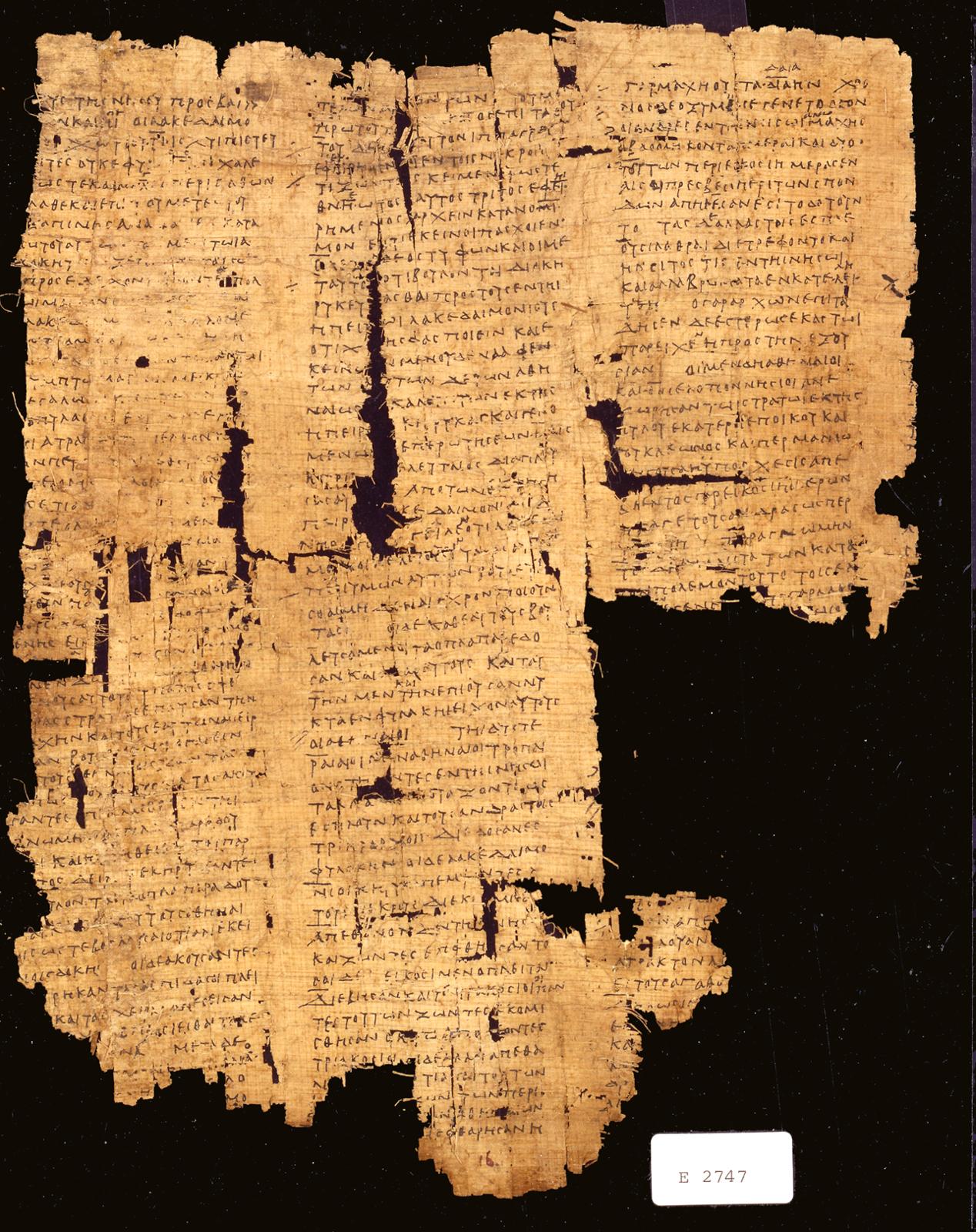
Nearly 2,300 years ago, a reader in provincial Egypt owned a copy of one of history's greatest works. This fragile papyrus preserves part of Thucydides' account of the Battle of Sphacteria — where a force of Spartan soldiers did the unthinkable and surrendered. Among the oldest manuscripts of Thucydides anywhere in the world, it bridges the ancient and modern transmission of a text that has never stopped being read. Thucydides, History of the Peloponnesian War, Book IV.36–41 · el-Hibeh, Egypt · Penn Museum, E 2747.

History of the Peloponnesian War

Reading companion for Thucydides's History of the Peloponnesian War — the foundational text of Western historiography.