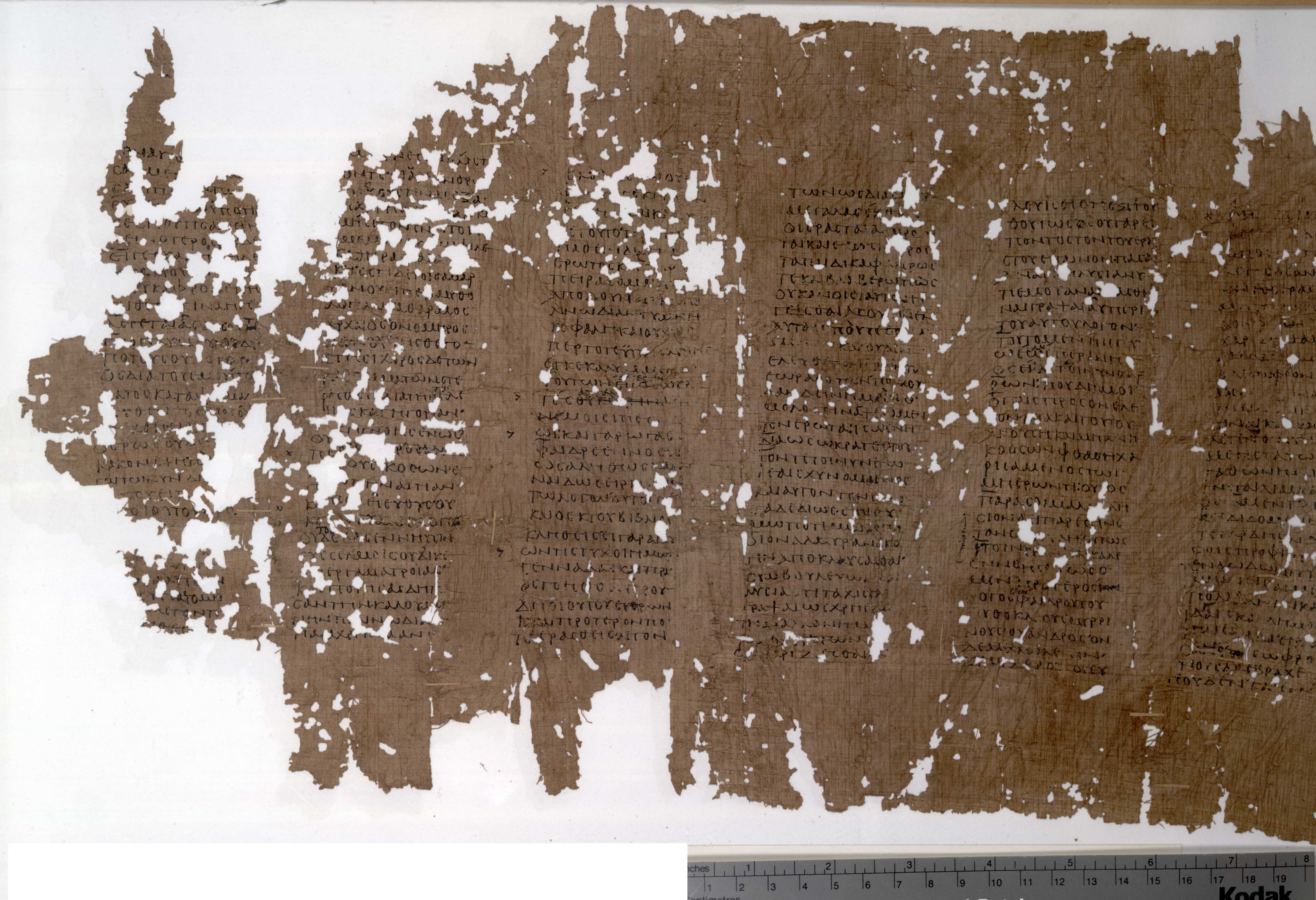
Papyrus Oxyrhynchus XVII 2102 (P.Oxy. XVII 2102), held at Oxford, is a Greek papyrus from Oxyrhynchus, Egypt, dating to the late second century AD — likely its second half — and one of three Oxyrhynchus witnesses to Plato's Phaedrus. This recto image shows nine consecutive columns (the last three very fragmentary) from a roll measuring 25.4 cm in height, written in a round, upright literary hand of medium size with short lines of approximately 5 cm set in columns 15 cm tall, slightly inclined to the right. A second hand is frequently in evidence, introducing corrections and variant readings from a different exemplar, inserting accents, breathings, marks of elision and quantity, and marginal signs; punctuation by high and medial dots, paragraphi, and colons marking changes of speaker is also largely secondary. A coronis at column v, line 21 marks the end of a section. The original scribe was careless and made numerous errors, most of which the corrector caught; despite this, the text is a reasonably good one, collated against Burnet's edition. It was discovered during the excavations of Bernard Grenfell and Arthur Hunt at Oxyrhynchus and published in volume XVII of The Oxyrhynchus Papyri.

Phaedo

Reading companion and full text of Plato's Phaedo, a Socratic dialogue set on the day of Socrates' death, in which he and his companions explore four arguments for the immortality of the soul and the philosopher's relationship to death, recollection, and the eternal Forms.

April 12, 2026 · 133 min · Eduardo Alemán